Sting Book. Final draft

wpid-Photo-20150427181007885.jpg

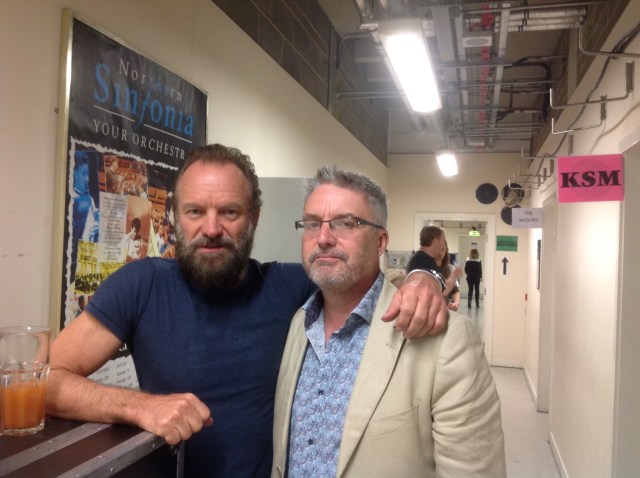
Well, I am hopefully now in the final stage of the editing process for my Sting book. The (hopefully) final draft is sent off – so I am getting ready to enter the process of indexing and finalising the final photos that will be used. So, one of the bits I have deleted from my first draft is a description of each chapter – so here they are here. Here’s hoping the real thing will be out soon.

The book explores Sting’s relationship to place and space via the themes of the following chapters.

Chapter 1 commences by outlining Sting’s background in Newcastle. The chapter provides a historical context to Sting’s place of birth, its Roman past, Swan Hunter shipyard, the coal mining industry, the tension of working class and middle class values, and his Catholic upbringing – all of which are so important when attempting to understand Sting’s identity, sense of place and subsequent creative output.

Chapter 2 focuses upon the specifics of the relationship of Sting’s hometown in the construction of his identity. After outlining some of the meanings associated with the word ‘Geordie’, the chapter considers Sting’s current complex relationship with his hometown, and some of the songs that have expressed this. The chapter also considers the ways in which Sting’s relationship with ‘home’ has also helped him circumnavigate two instances of writer’s block and how his songs are arguably feeding into the redefinition of what it means to be a Geordie. Most importantly, the chapter suggests some of the reasons why an artist such as Sting finds it necessary to construct more than a single identity, and how ‘stardom’ has impacted upon this necessity.

Chapter 3 discusses Sting’s time in Newcastle with his first band – Last Exit. Rather than write a chronological account of the history of the band, it was decided to interview a range of people who were involved with Sting during his time as a local musician based in the North East of England. The chapter considers his early influences, the venues he frequented, and his early performances, in addition to providing an account of Sting’s early role as a freelance musician and his dealings with musical theatre, providing an important lineage to his work on The Last Ship.

Chapter 4 commences with a brief case study of the now demolished Impulse Sound Recording in Sting’s hometown of Wallsend – the place where Sting recorded his first recordings with the Phoenix Jazzmen and, more importantly, many of the demo recordings with Last Exit. After briefly discussing the history of the studio and its location, the chapter proceeds to allow the people who actually worked with Sting to describe the idiosyncratic traits of the studio and the development of Sting as an artist, whose early vocal and songwriting abilities were developed in this space. The discussion then highlights 29 individual Last Exit compositions/recordings produced in the two-year period they were together, fifteen of which were composed by Sting. After discussing the available recordings more generally, the chapter proceeds to examine early demos of five songs that progressed onto international acclaim with The Police and Sting’s solo career, with a particular focus on the changes Sting implemented when performing the songs in a new commercial environment.

Chapter 5 focuses on Sting’s move to London and the eventual formation of The Police. After leaving Newcastle in January 1977, the chapter discusses the early London performances Sting undertook with Last Exit, his early rehearsals with Stewart Copeland, and how he resonated musically and philosophically with the punk scene and cultural backdrop of London. The chapter includes details of the early tours by The Police, and includes interviews with ‘Fall Out’ photographer Lawrence Impey, music promoter Jonny Perkins and one of the first musicians he worked with after moving to London, ex Gong bass player Mike Howlett, who actually introduced Sting to Andy Summers and played in an early incarnation of The Police – Stontium 90.

Chapter 6 initially focuses on the early accommodations Sting occupied in London, particularly highlighting the basement flat he settled in at 28 Leinster Square in Bayswater in the early months of 1977. The Chapter continues with a discussion surrounding how a number of seeming coincidences (what Sting would call synchronicity) – such as The Police’s appearance in a Wrigley’s spearmint gum advert in February 1978, Sting’s role in Quadrophenia, a heavy touring schedule and the recording of the first album by The Police, Outlandos d’Amour – eventually resulted in commercial success in the UK in 1979, which included top 20 hits with ‘Roxanne’ and ‘Can’t Stand Losing You’, in addition to a headline appearance at the Reading Festival on 29th August 1979. There is also a discussion surrounding his compositional working methods, which are often conducted in ‘places of convenience’, such as the flat in Bayswater, his car, the recording studio and on the road – often with the use of portable recording technology to document his ideas. The chapter then examines Sting’s songwriting, which is seen to derive from fragmented extracts, sometimes with the aid of notetaking and music technology. He is also noted as considering the instrumental music itself to have its own narrative, which is then often juxtapositioned against often contradictory lyrical content. The chapter concludes by proposing a number of reasons why Sting has made creative decisions, where he thinks his inspiration comes from, and ways in which he has circumnavigated writer’s block.

Chapter 7 considers Sting’s emergence as a writer of political songs in the early 1980s. Commencing with his engagement in live events such as the ‘The Secret Policeman’s Other Ball’ (1979), Live Aid (1985), the ‘Participation of Hope Tour’ (1986) and the Human Rights Now! Concerts (1988), the chapter considers how Sting emerges as an independent star presence, travelling the world with an aim not only to raise funds, but awareness of human rights issues. His involvement in the 1988 Human Rights Now! Concerts witness him travelling to Third World countries such as New Delhi, Zimbabwe and Argentina, with a performance of ‘They Dance Alone (Cueca Solo)’ at River Plate Stadium, Buenos Aires, being a particularly poignant event. Originally recorded on …Nothing Like The Sun, the song was inspired by the women who perform the traditional Chilean courting dance (the Cueca) alone, with pictures of their dead husbands, fathers and sons pinned to their chest. An overt protest to Chilean dictator Augusto Pinochet (1915 – 2006), the location of the concert is interesting, as it is located in a country where many Chilians fled to during the Pinochet regime – as it was not possible for Sting to perform in Chile in 1988 for political reasons. Two years later, in 1990, the song was performed at the National Stadium in Santiago, Chile, providing a fabulous example of the power of the combined forces of music and place. The discussion then focuses on the criticism Sting has received for his political activism in the UK press, examining how, despite good intentions, his activities often seem to result in negative press. We see Sting described as a do-gooder and a bore, with the press even depicting his activities with the Rainforest Foundation as a “self-aggrandising global photo-opportunity”.[i] This press coverage can be seen to come from all directions, including The Daily Mail, The Guardian, The Sunday Times, The Daily Mirror and The Independent, with many taking the opportunity to criticise his fund raising even when reviewing his music – effectively confusing the two activities. Placing Sting’s music in context alongside other artists who have incorporated indigenous, often non western influences and sounds in their music and re-appropriated them for their own artistic ends, the chapter asks the question: do songs such as ‘They Dance Alone (Cueca Solo)’ and ‘Desert Rose’ de-contextualise the music and traditions of oppressed countries, or do they, as Sting intended, raise awareness of oppressed people and artists who otherwise have limited commercial success?

The final chapter of the book initially focuses on Sting’s touring schedule in both The Police and his solo career, and how the symbiotic relationship of both America and the UK fuelled his success.  After briefly discussing the early tours and singles of The Police, the chapter proceeds to consider the emergence of The Police as an ‘authentic’ band, after initially causing confusion with the music press on both sides of the Atlantic in terms of their punk credentials. More specifically, the chapter explores how the music press at the time made sense of Sting as a songwriter and performer, and how he gradually emerged as a creative force, taking over from Stewart Copeland as the spokesperson of The Police. The chapter concludes by considering why Sting has been given such a hard time by the press when disguising his background, making comparisons with other artists who have undertaken a similar process. The chapter also considers arguably his most nostalgic gesture, The Last Ship, which in many respects has assisted the process of him coming to terms with his past and making peace with his hometown.


[i] Alan Jackson ‘Change The Record Sting’, http://search.proquest.com.ergo.glam.ac.uk, The Times, 30th January1993.

Posted in Music Industry, Musicology, Sting | Tagged , , , | Leave a comment

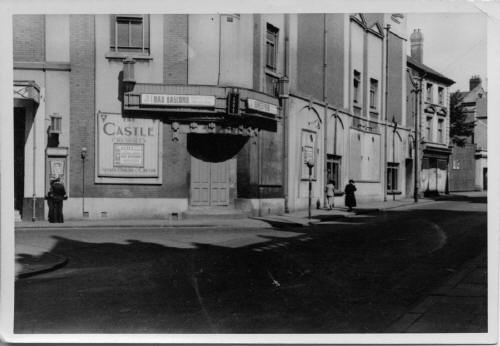
The Castle Cinema in Merthyr: Oral Memories Needed


This slideshow requires JavaScript.

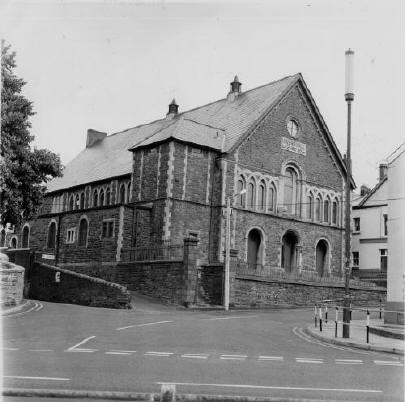
As part of my Oral History of Music in Merthyr Project, I am now looking for specific recorded memories of music making in The Castle Cinema, between 1955 to the mid 1970s. This venue featured bands like the Ted Heath Orchestra during the 50s and believe it or not, Pink Floyd in 1967. My Facebook page is featured a few written memories of the venue, but what I need now are oral testimonies.

So, could I ask anyone who remembers this venue to click here and leave a recorded account – simply click on the recorded message to record a video. You may want to make a few notes beforehand, but most importantly – leave your memories.

For info, the project recently had a write up in music magazine Louder Than War, which can be accessed here and more details here and here

See if the following pictures jog any memories.

Posted in Merthyr Music Project, Musicology | Tagged , , , | Leave a comment

Student Performances 2016

As we approach student graduation, here is a small selection of some of the performance portfolio recordings of this year’s students.Enjoy.


Posted in Musicology | Leave a comment

Matching Mole, Progressive Style, Genre and Protest

I attended a really fantastic conference last week on Progressive Rock at Edinburgh University. It was a great opportunity to spend three days listening and thinking about the various factors that make up this genre of music. Here is the paper that I presented at the end of the conference on Matching Mole.

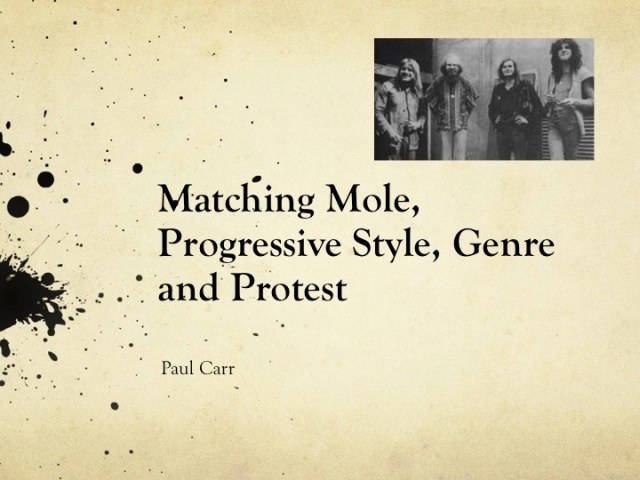
Slide01.jpgThis paper combines fragments of two forthcoming journal articles on Robert Wyatt’s Matching Mole. After providing a brief analysis of selected tracks from the band’s two official albums, the paper will consider how their creative output resonates with genre, stylistic labelling and protest narratives. This short-lived band were formed during the last couple of months of 1971, after Robert Wyatt had completed his five-year tenure in Soft Machine, with the name simply being a sarcastic pun on the French translation of his old band – Machine Molle. In addition to Wyatt, the band consisted of Phil Miller on guitar, Dave Sinclair and Dave MacRea on keys and Bill MacCormick on bass. I had the opportunity to interview three of the five members when putting together this paper.

 Album Analysis

Slide02.jpg

Recorded through December 71 to February 72 and released in April 72, the first album by Matching Mole (1972), ranges stylistically from ‘O’ Caroline’, which is lyrically a sentimental first person ode to Wyatt’s ex girlfriend, artist Caroline Coon, to ‘Signed Curtain’, a song which appears to critique the predictability of popular song format. With the hesitant delivery of the melody suggesting that Wyatt is thinking through the song in real time, it begins as follows

Performed solely on piano and vocals, the track has the impact of sarcastically and humorously involving the listener in the hermeneutics of the listening experience: what is going to happen next and what does it mean? One of musicologist Leonard Mayer’s (1961) main concerns was how a listener experiences the unfolding of successive events in a piece of music, and how these events evoke what he describes as ‘hypothetical meanings’. When listening, the musical events that we expect to happen are seen to either occur (resulting in our expectations being fulfilled), be delayed (resulting in our expectations being suspended) or not occur – making the event ‘unexpected’ and leaving our expectations unfulfilled. In this song, Wyatt seems to be not only informing us what his creative processes may have been when composing the song, but is also asking us to question the formulaic structures in popular music – the allusion of choice that Adorno described as pseudo individualism (2011).

Slide03.jpg

Phil Miller’s ‘Part of the Dance’, is the first track on the album to contain one of the hallmarks of Canterbury scene progressive rock – an overt leaning toward jazz influences. However, although jazz-fusion type unison passages begin and end the track, the ‘solos’ mainly consist of group improvisation, with all instruments having an equal hierarchy, with no instrument dominating. This is a stylistic trait Matching Mole were to continue to exploit on other tracks across both of their albums. Indeed this free group improvisation is continued on the last three tracks of their first album. These tracks appear to tie in with the later work of Soft Machine, which are in turn influenced by early jazz-rock albums by Miles Davis, in addition to free-jazz improvisers such as Albert Ayler. Here is a brief snippet of the final track on the album ‘Immediate Curtain’.

Although critiqued by some for its lack of coherence, for me, the first album appears to gradually and deliberately become more avant-garde as it progresses, with the functional harmony of the early tracks, gradually giving way to the aforementioned free form improvisations.

Slide04.jpg

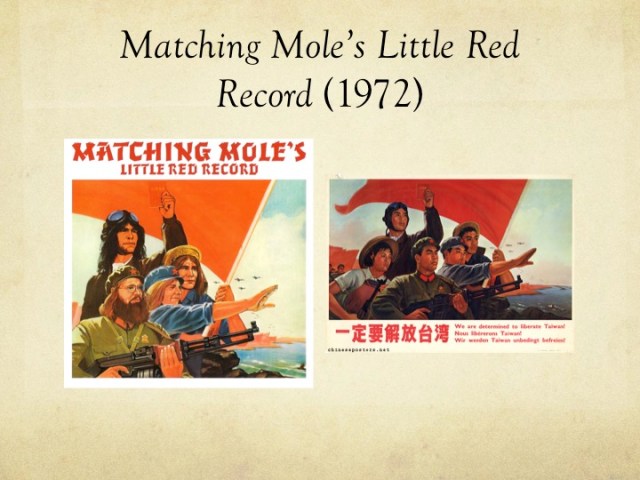
Before discussing some music from the 2nd album, the cover of Matching Mole’s Little Red Record deserves particular attention first. Recorded between July and August 1972, the title of the album directly references Mao Zedong’s Little Red Book, once again incorporating the use of a pun, a device so common in Wyatt’s album and song titles. However, the album artwork is also overtly based on Chinese propaganda images of the time, baring a clear resemblance to a poster produced around 1971 by the Red Eagle Corps of the Air Force, Nanjing.

Slide05.jpg

Considering Zedong’s reputation as a war criminal, this was a controversial image for an album cover that in retrospect could be regarded as an ill thought out gesture by Wyatt and the record company. Indeed when I asked Dave MacRea about this, he confirmed

“It was certainly not my creation and I was astounded to find myself with a machine gun in my hand”.

In addition to Zedong’s Little Red Book, it is possible that Wyatt’s thinking was influenced by the socialist collection of songs entitled The Little Red Songbook, SLIDE first published in 1909 and containing the song ‘Red Flag’, that Wyatt recorded on his Nothing Can Stop Us (1982) album. More recent appropriations of the Little Red Book range from The Little Red Book of Obamunism Slide07.jpg to a House of Commons episode in November 2015, when the Shadow Chancellor John MacDonell was heavily criticised for jokingly quoting Zedong when attempting to make a point about the UK government selling off state assets to the Chinese.

Slide08.jpg

Returning to the music, the first thing one notices is that the 2nd album is far more democratic when it comes to songwriting credits, with Wyatt not writing any songs on his own, but involved in co-writing five of the nine tracks with all band members. Indeed it is Dave MacRea who dominates the songwriting credits on the album. However, discussing the co-composed opening track, ‘Starting in the Middle of the Day We Can Drink Our Politics Away’, MacRea brushed away any thoughts of meaningful collaboration or lyrical content, commenting

“The song obviously had little meaning. I wrote the melody and Wyatt would have dumped some lyric over the top”

As we will hear later, this song is delivered in a mock operatic voice, making the words difficult to decipher. Although the title does allude to some deeper political conviction, taking MacRea’s earlier comment into consideration, it would be fruitless to second-guess what this is.

‘Righteous Rhumba’ contains the only track on the album that has some sort of link to the album cover, with the lyrics seemingly criticizing Britain joining the European Economic Community in 1972, so it has great resonance today. After outlining how European countries ‘come down the right hand lane’ on the roads, the lyric proceeds to state how Wyatt would, and I quote, “rather have the Chinese here than Europe on me thrust”, a clear reference to his emerging interest in communism. We will listen to a track from this album later.

Slide10.jpg

So, taking these two albums into consideration, where do Matching Mole fit in to genre and stylistic classification of progressive rock? In 1997, John Covach asserted that Close to the Edge (1972) by Yes “challenges the listeners sense of stylistic boundary”, and it proposed the two albums by Matching Mole do the same – with the added complexity that, unlike the music of Yes, the stylistic boundaries on these albums were not embraced in any meaningful way by the music industries classification of the style (if we can call it that), or indeed by many of the musicians, who subsequently performed within the stylistic boundaries that were established. It is this that what I find most interesting about the music of Matching Mole – it rock music with minimal commercial imperative.

Slide11.jpg

Chris Anderton (2010) outlines how the stylistic constituents of the major symphonic rock bands are often mistakenly used as a measure to grade the ‘progressiveness’ of a given act. Considering the academic and journalistic articles that align the label ‘progressive rock’ exclusively with symphonic rock bands to be “too narrow in their scope” (418), Anderton argues that the tag of “Meta-Genre” is more appropriate, a term that avoids “conflating ‘symphonic progressive rock’ with progressive rock in general” (ibid).

Edward Macan however positions the Canterbury style of Matching Mole to be one of a number of ‘related styles’, that includes English jazz-fusion, English folk-rock, English heavy metal, minimalism and avant-garde electronic music. Macan then discusses how the stylistic boundaries of some of the aforementioned ‘related styles’ share commonalities with progressive rock, with indicative examples including the similarities between jazz-rock fusion bands like Brand X and Colosseum II and Canterbury sound bands such as Soft Machine and Gilgamesh. As already discussed at the conference, these boundaries are often blurred.

Discussing the Canterbury style directly, Andy Bennett (2002) regards it as an example of a sub-genre closely associated with the formation of place, in a similar vein to Detroit (Motown), Philadelphia (the Philadelphia Sound) and Seattle (Grunge). Bennett introduces the term ‘mythscape’ to facilitate a way of considering how music associated with Canterbury has played its part in establishing romanticised myths about the region, effectively forging a sense of community through the collective construction of the city in musicalized terms. When I interviewed the ex members of Matching Mole, both Bill MacCormack and Dave Sinclair told many stories that would comply with this narrative. Indeed it also resonates strongly with what Chris Atton was saying regarding Foucault’s notion of our discourse forming the objects we talk about.

Where as a meta-genre considers all of its components as equal constituents of progressive rock, the sub-genre considers a band such as Matching Mole more a ‘lower subdivision’, where as the ‘related styles’ outlined by Macan would deem the band as part of a group of styles, entitled the Canterbury sound, that has some similarities, but are distinct from what became the music industry’s categorization of the style.

Interestingly, none of these classifications consider music such as Matching Mole’s as an ‘hybrid style.  Joseph Stuessy, in his PhD dissertation ‘The Confluence of Jazz and Classical Music from 1950 – 1970’, presents an interesting model, outlining the following two categories (Stuessy, 1977, p. 6-7):

  • The ‘Integrated Confluent Style’, in which elements of two [or more] styles are fused into a new style. Slide
  • The ‘Adjacent Confluent Style’, in which elements of two [or more] styles are juxtaposed in the same composition. Slide

Regarding the ‘Adjacent Confluent Style’, Stuessy delineates two further paradigms of integration:

  • The ‘Adjacent Vertical Style’ – where both styles sound alternatively (very common in bands such as Yes for example).
  • The ‘Adjacent Horizontal Style’ – where both styles appear simultaneously.

Although it is sometimes difficult to differentiate between the ‘adjacent confluence’ and ‘integrated confluence’ styles, I would argue this presents a useful way of considering the stylistic factors of a band such as Matching Mole. Taking the aforementioned ‘Starting in the Middle of the Day We Can Drink Our Politics Away’ as an indicative example, it is to my ears at least a clear example of the ‘Adjacent Horizontal Style’, with the piece being an overt mix of two parallel strands, minimalism influenced keyboards alongside the ‘mock operatic voice’ I mentioned earlier. Interestingly, this clear division also reflects the way the piece was composed, with the lyrics/vocals being ‘dumped over the top’ to paraphrase Dave MacRea.

Slide15.jpg

In conclusion, regardless of if one defines Matching Mole as part of a meta-genre, a related style, a sub-genre, a hybrid style or part of a mythscape, it is important to point out that the shear stylistic breath of the Canterbury style alone is obviously a problem when attempting to specifically classify it, with the music of National Health, Soft Machine, Caravan, Hatfield and the North and Matching Mole having numerous stylistic tendencies that simply don’t overlap.

From speaking to the ex members of the band, it is clear that Matching Mole never intended to be part of the ‘progressive rock’ style or genre, in either its narrow or broader perspective. Their two official albums represent a snapshot of popular music history, when it was possible to get paid to produce music outside of the mainstream, and still get your product recorded and released by a record company. I doubt these conditions will ever be repeated again.

It seems to me that largely forgotten bands such as Matching Mole are a useful vehicle for further research, as they help provide an alternative history, which is understandably so often dominated with ensembles that have mass appeal. In the case of Matching Mole, this alterative history involves stories of shoestring rehearsals in the basement of Wyatt’s flat in Ladbroke Grove, how band members had to freelance with other groups, or even take up day jobs in order to make ends meet. It is also a history that includes musical equipment having to be returned once the band split up and touring schedules that had limited appeal in the UK. It even includes histories of ‘anti-virtuosity’, Bill MacCormack had only been playing the bass for around a year when Matching Mole formed.

Returning to politics, although Matching Mole were certainly not political in the sense of a band like Henry Cow, they were, I would argue, political in the more lateral sense as outlined by Wyatt. He commented

I don’t think of music as intrinsically political, but I think it’s quite pretentious to claim that you’re not trying to say anything when you sing. […].Personally I see the political role of music in a totally different light. “Memories Of You” for example (the B-side of ‘Shipbuilding’) may sound just like a nostalgia song but it’s political for me because Eubie Blake who wrote it and who was 100 in 1983 was writing before jazz and somehow represents a much used but amazingly uncredited strand of American popular music. That he gets some royalties for that song is the only genuinely quantifiable political act I can make: the transfer of resources. Beyond that I have no control over a song and how it affects anybody (Denselow, 1983).

I would argue that alongside the more overt clues in Robert Wyatt’s later catalogue, the avant-garde sections in Matching Mole’s music represent a band who are determined to adhere to a rock aesthetic, despite staying away from any blues influences or complying with any of the usual ‘genre rules’. This in itself is a political gesture. Additionally, Wyatt’s falsetto wordless vocals could be regarded as critiquing the English language hegemony of popular music, maybe this is one of the reasons they were more popular in territories such as France than in the UK?

As noted by the likes of Dick Hebdige (1995), the notion of borrowing accepted meanings and subverting them has a powerful impact not only on the creative processes of music, but also its reception, a term Hebdige famously described as ‘semiotic guerrilla warfare’ (1979). Matching Mole were clearly involved in this process via subverting political art, pop music, jazz, rock, minimalistic and avant-garde influences, using these to in turn not only reshape their largely middle class backgrounds, but also to contribute to this meta-genre we all love.


Posted in Musicology | Tagged , , , , , , , , , , , , , , , , , , , , , , , , , | Leave a comment

Memories of Music Making in Merthyr Tydfil

I had a fantastic session this week talking with some people at a coffee morning up at the 3Gs in Merthyr Tydfil about their memories of music making in the town. This session is going to be followed by a forthcoming session at Theatre Soar for Merthyr Tydfil Historical Society, where I am doing a talk on the research project and hoping to encourage further interest. In the lead up to this talk and the others that follow, I have put together a Facebook page, which is attempting to encourage people to share their memories of the various places and spaces that music activity took place. This is turning out to be a really useful space for dialogue and memory exchange.

I would like to encourage anyone, inside and outside of Wales to like the page, as it is not only beginning to provide a really interesting snapshot of of how music making took place in Merthyr, so by default it must have a relationship to how similar activities took place in other towns in the UK.

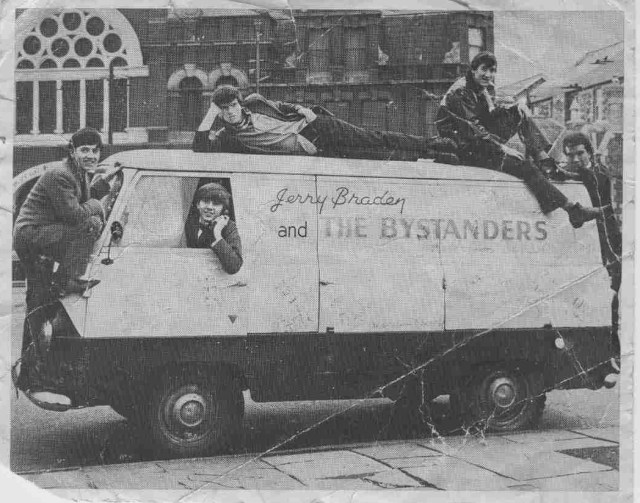
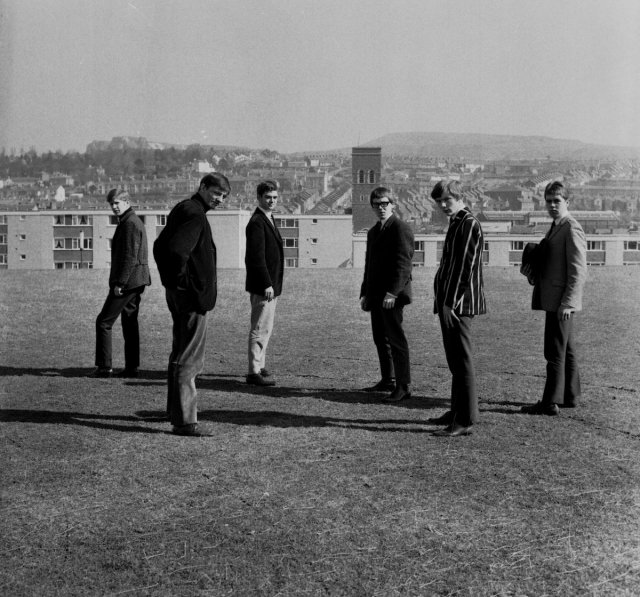
When I was a teenager, one of my favourite band was Welsh progressive rockers Man. It turns out, that the origins of this band are firmly grounded in the town of Merthyr Tydfil, with the band starting off as The Bystanders. I have copied a few pictures of the band below, courtesy of Alan Compton and John Bannon – who have both being incredibly generous with their memories and memorabilia.


John also recently put together an exhibition of Man in Swansea, which is encapsulated in this fantastic video, which tracks the evolution of the band from the Bystanders. This, alongside a selection of the Bystanders tracks can be heard in the You Tube Playlist below. Enjoy!


Posted in Merthyr, Musicology | Tagged , , , , , , , , , , | 1 Comment

Dweezil’s Response: More on the Grand Rights ZFT Saga

It was fascinating to read Dweezil Zappa’s response today to his brothers open letter  – it can be read below

As anyone who has read my blog will know, I have been interested in the Zappa Family Trust’s restriction of copyright for a number of years – having first published a paper on it around six years ago. When I wrote the paper, I positioned Dweezil very much on the INSIDE of the activities of the Zappa Family Trust, but having read his response to his brother – I HAVE TO ADMIT I WAS WRONG. It appears that Dweezil himself got a more restrictive deal than the tribute bands I was writing about. I apologise for that.

Although my paper would have come to the same conclusions – Zappa’s entire catalogue can not be considered as a unified GRAND RIGHT, and this type of restriction actually contradicts Frank Zappa’s position regarding the importance of freedom of speech . To put it simply, if these type of restrictions were sanctified in court, the Zappa Family Trust would be the CENTRAL SCRUTINISER – not a position Zappa senior would be proud of.

I can sincerely once again only hope that this whole affair comes to a amicable conclusion soon. As a fan – i just want to listen to the music, and one of the ways I can do that is to ask the ZFT to allow tribute bands (including Dweezil) to play Zappa’s music.


Posted in Musicology | Tagged , , , , , , | Leave a comment

Is the Eurovision Song Contest Getting Better?

Yesterday, like I do most years, I dutifully switched on the TV to have my yearly moan at the Eurovision Song Contest. There is something deep inside me and many others that loves to pass comment on the ‘rubbish’ songs, how they don’t represent the music of their respective countries and how the voting is rigged, etc. So, having watched the first hour or so of the programme, I got a surprise, I was actually liking some, if not a lot of the music!! This was complemented by seeing guitar players fiddle with their effect pedals and although there was some dodgy pitching from some of the vocals – it showed it was real! So after switching channels to make sure I was watching the right programme, I had to ask the  question – is the Eurovision Song Contest getting better?


Although I realise it could be argued that compared songs in the ESC is like comparing two non league teams, or as someone said on Facebook – like looking down a manhole and saying “that looks nice” – I certainly thought this was a step in the right direction.Probably the best way to display my cynicism when  watching the show last night is indicated in my FB post below. When hearing the song by the Ukraine and really liking it, I was convinced it would end up last – it actually won 🙂

Now that there are around 200 million people watching the show, including those in the States, we will probably start to see more serious pop stars doing the ‘interval slow’. However, despite Justin Timberlake’s credible performance, it did not come close to this


For anyone under the age of 30 – watch it to the end.

Posted in Musicology, songwriting | Tagged , , , | Leave a comment

Grand Rights and the Zappa Family Trust Revisited

IMGP2445

As the case between Dweezil Zappa and his brother Ahmet reaches a new level of public debate, I thought I would document a few thoughts on Grand Rights.When I wrote my original paper 5-6 years ago, the American Society of Composers, Authors and Publishers (ASCAP) outlined the following criteria through which Grand Rights can be judged. As far as I am aware, it has not changed.

(i) The performance of an entire dramatico-musical work. For example, a performance of the musical play Oklahoma would be a dramatic performance.

(ii) The performance of one or more musical compositions from a dramatico-musical work accompanied by dialogue, pantomime, dance, stage action, or visual representation of the work from which the music is taken. For example, a performance of ‘People Will Say We’re In Love’ from Oklahoma with costumes, sets or props or dialogue from the show would be dramatic.

(iii) The performance of one or more musical compositions as part of a story or plot, whether accompanied or unaccompanied by dialogue, pantomime, dance, stage action or visual representation. For example, incorporating a performance of ‘If I Loved You’ into a story or plot would be a dramatic performance of the song.

(iv) The performance of a concert version of a ‘dramatico-musical work’. For example, a performance of all the songs in Oklahoma even without costumes or sets would be a dramatic performance.


Now the copyright of the use of the name is something else, as the Zappa Family Trust have trademarked the name Zappa Plays Zappa. However, the important question I am interested in, using the above criteria, is are Zappa Plays Zappa (and other tribute bands) infringing Grand Rights territory? My simple response, would be no – usually! As indicated in my original article, the ZFT have attempted to argue that tribute artists performing Zappa’s music are basically part of his  overarching musical dramatic ‘meta narrative’ – what Zappa called ‘project object’ and ‘conceptual continuity’. The only criteria it comes close to is point ii above – but even then we have to consider Zappa’s music in its entirety to be part of a dramatic-musical work, which it is not according to the widely considered definition. However, if a tribute band wanted to  create a musical dramatic version of Joe’s Garage for example, then that would be something different, and would arguable fall under point iv above. The recent gigs by ZPZ doing the Roxy and Elsewhere gigs are a case in point – this would be a Grand Rights claim


However, under ‘normal circumstances’, if a band is simply performing Zappa’s music – it is not. So to conclude, Grand Rights has the potential to be applicable, but most of the time it won’t be. All bands need to do is keep check what they are doing against the above criteria. Providing you are not moving into Grand Rights territory, you are perfectly within your rights to play Zappa’s music. The ZFT will obtain income via PRS, ASCAP etc, the musicians get to play Zappa’s amazing music and the audience get to enjoy it. Everybody should be happy!!

Posted in Musicology | Tagged , , , , , , , , | Leave a comment

Apple Stole My Music. No, Seriously.

Posted in Musicology | Leave a comment

Live Popular Music Making in the Key Buildings of Merthyr Tydfil between 1955 to 1970: The Formation of a Digital Archive

I am currently working on a new research project that looks at the memories of popular music making in Merthyr Tydfil between the years 1955 to around 1970. I am really fortunate to have a number of partners helping me with the project, but what I am looking for next are people who remember going to popular music concerts during this time. I am particularly interested of music making in the following buildings (Thanks to Old Merthyr – who kindly gave me permission to use these pictures)

The Miners Hall

ChurchStreet_MinersHall_1976_ParkStudios_Grawen_small

The Palace Cinema

Merthyr-Pontmorlais-Palace

The Castle Cinema

Merthyr-HighSt-CastleCinema_1947_small

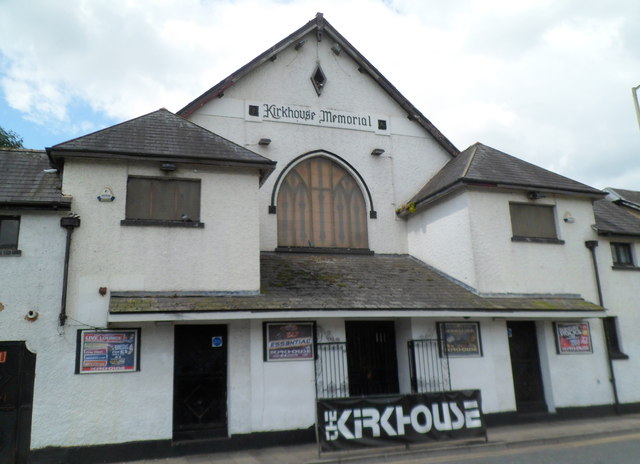
The Kirkhouse Hall

3000354_afa284fb

The Theatre Royal

TheatreRoyal_FromthePromenade

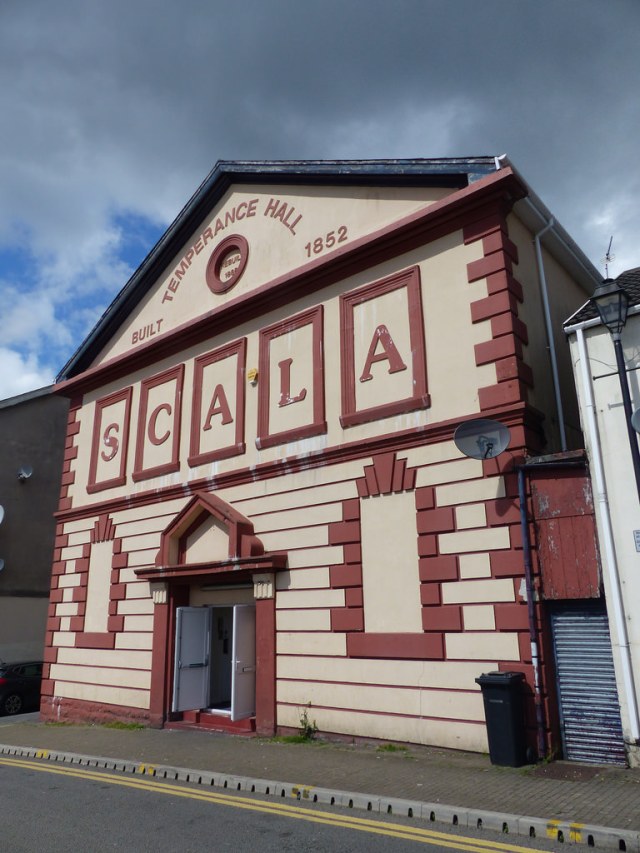
The Temperance Hall

Temporance

If anyone has any memories of music making in these buildings, or knows anyone who does, I would really appreciate you getting in touch, or leaving your details in the comments box so I can get in touch with you.

Brief Snapshot of the Heritage to be Uncovered

Welsh popular music artists have long been internationally prevalent, through the likes of Tom Jones and Shirley Bassey during the 1960s, rock bands such as Man, Budgie and Badfinger during the 1970s, The Alarm and The Manic Street Preachers emerging during the mid and late 1980s, and Super Furry Animals and Catatonia during the Brit Pop influenced Cool Cymru period of the 1990s. Indeed as recent as 2016, Merthyr Tydfil based quartet Pretty Vicious can be seen to be continuing this tradition – having recently secured a major record deal with EMI, off the back of performing in the local town hall. However, bands such as Pretty Vicious are part of a rich tradition, which the project aims to make more visible.

For example, the early 1950s was a time of mass entertainment in Merthyr Tydfil, a mix of cinema, variety entertainment and live music of various types, featuring nationally known visiting artists such as Ted Heath and Eric Winstone, but also local bands and ensembles performing regularly in the town. All of these activities took place alongside the emergence of rock ‘n’ roll, and brands such as Esso Blue Paraffin, Old Holborn Tobacco, Richmond Pork Sausages, Park Drive Cigarettes Scott’s Oats, Oxo, Surf washing powder, and Clarkes shoes. Additionally, new technologies of the early 50s included Hoover vacuum cleaners and Philips and Rediffusion TVs, all of which provided a cultural backdrop to the emergence of rock ‘n’ roll.

During this time, the centre of Merthyr proudly housed a range of entertainment venues that were key to the propagation of popular music in the town. This included four cinemas, some of which had already been appropriated from theatres, and were to subsequently go through further transitions into bingo, snooker and live music venues. The four cinemas included The Palace Cinema, The Temperance Hall, The Castle Cinema and The Theatre Royal.

The Use of Cinemas as Music Venues During the Early 1950s

Examining local press coverage reveals a number of ‘celebrities’ visiting Merthyr in the early 1950s, all using the aforementioned cinemas as venues.

For example on Sunday Nov 23rd 1952, one of the most famous bandleaders from the 1930s, Geraldo and his Orchestra played at The Theatre Royal – featuring drummer Eric Delaney (both Ted Heath and guitarist Ivor Mairants played with this band at one point). Although not used specifically as a popular music venue, The Temperance Hall is also seen to feature ‘variety’ acts from the early 1950s – acts such as Mabel and Stanley Somers, the ‘Ventertainer’ Harry Benet, actor Archie Glen and The Rexanos. On 13th November 1950 Hughie Green’s Opportunity Knocks (then just a radio show) performed there, as did Alex Afrique, who is proudly associated as being “from the London Palladium”. This venue seems to be a place where early examples of post 1950s live entertainment took place in Merthyr, although it was infrequent, seeming to return to showing films in late 1951. This may indicate that the Town Hall Theatre in Pontypridd was winning light entertainment war?

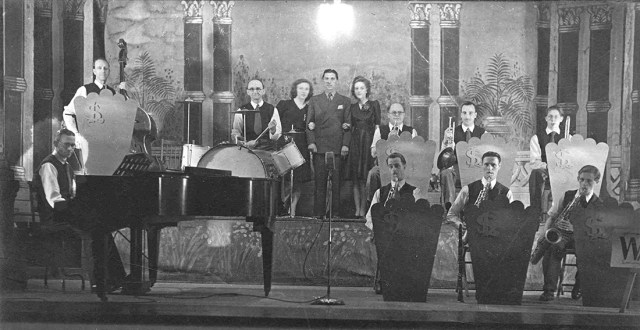
St. Louis Band at the Kirkhouse

St.LouisBand.Kirkhouse_1950s

Despite this ‘tug and war’ battle with other venues outside of Merthyr, the widely acclaimed Ted Heath and his Orchestra played at The Castle Cinema on Sunday February 17th, 1952, followed by Eric Winstone playing there for the 2nd time in two years on Sunday April 13th 1952. This was obviously the start of the venue being used as a ‘temporary’ performance venue. For example Harry Roy and his band played there on April 27th 1952. Billed as a ‘Dixieland group’, this was another instance of a well known ‘pre rock ‘n’ roll artist frequenting the town.

Other Venues in Merthyr Featuring Local and National Music

 In addition to the four cinemas, there were also a number of other venues that featured music, mainly by local musicians. The two most prominent bands during the early to mid 1950s were The Skymasters Dance Orchestra and The Pathfinders, both of who are seen to be performing regularly in the town, having residencies at The Miners Hall and New Drill Hall respectively. The Skymasters can be seen to be performing in The Miners Hall every Wednesday and Saturday night from the very early 1950s, featured in the Merthyr Express as ‘The New Merthyr Band Sensation’, led by Ken Rees, described as “Wales’ youngest bandleader”. Likewise, in an edition of the Merthyr Express in October 1950, Merthyr can be seen to feature The Pathfinders (with vocalists) at The New Drill Hall, billed as “Merthyr’s Premier Dance Orchestra”, costing 2 shilling to get in and billed as playing “every Saturday night”.

The Pathfinders

ThePathfinders_1949_CyfarthfaSchoolReunion_EmrysJones&NeilJones_Crop.jpg

Moving forward to 1965, it is clear that the musical landscape has changed in Merthyr. With the ‘What’s On’ advert in the Merthyr Express now taking up the back page of the paper, the first popular music event of the new year is at The Palace Cinema, featuring Peter Lovis & The Spirals on Friday Jan 1st , with a   3/- entrance fee, followed on the Saturday by a ‘Big Dance’ , costing 4/6 admission. It is also noticeable that Bingo has now emerged, every Tuesday at The Palace Cinema. By 1965, Bingo appeared to be an emerging trend, with a ‘bingo club’ also starting at Kirkhouse Hall, Georgetown, every Saturday and Sunday. Bingo at the Palace Cinema progressed to every Tuesday, Thursday and Friday from June 4, replacing one of the music nights, possibly because there was not enough new music to keep public interest?

TheSpirals__February4th_1966.jpg

Interestingly, The Temperance Hall, Theatre Royal and the ABC (formally the Castle Cinema) are still showing films, making the Palace Cinema the main popular music venue in 1965. At this time however, it is important to point out that dancing appears to be more important than the name of some of the popular music groups. For example both the Friday and Saturday nights advertised in the January 8th edition of the Merthyr Express advertised the event as featuring ‘‘top pop groups’ followed by ‘two top groups’, with no band names mentioned. At the Capital in Cardiff, a venue recently frequented by The Beatles, Chuck Berry is headlining on Thursday January 14th, with the Graham Bond Organisation and The Moody Blues supporting. The Hollies are also seen playing in the Market Hall in Brecon on May 26th 1965.

Significantly, by 1965, neither the Miners Hall or the New Drill Hall are now being used as popular music venues, although a performance of Rigoletto took place at the Miners Hall on Thursday Oct 28th 1965.

As mentioned The Palace Cinema had emerged as the primary popular music venue by 1965, so as an indicative snapshot, here are some of the groups that played there. Does anyone remember any of them?

  • Jan 15th,Newport based The Interns with Rikki Allen, advertised as ‘straight from ITV’s ‘Thank Your Lucky Stars’
  • Sat 16th, Mike Kaye and the Kontrasts. Both of these bands come under the general advertising headline of Dancing and Bingo
  • The Sultans
  • The Crossfires
  • Charles Kingsley and the Combos
  • Tawney Reed Welsh born vocalist.
  • The Flower Pot Men
  • The Terrific ‘Robots
  • The Vandals Victims
  • The Road Runners
  • King Beez (Feat Carl Parlmer
  • Des-Finados,
  • The Fabulous Sultans
  • The Sensational Kondors,
  • Gaye Combo
  • Yelvertones,
  • The Next of Kin
  • Shades of Rhythm
  • The Fabulous Zenders
  • The Charles Kingsley Combo
  • The sensational Shades of Rhythm had a particularly big add at the venue on Saturday Oct 9th, as did Parlophone Recording Starts The Wild Ones (From America  and The Sons of Adam (From America.

Regarding popular music activities in other venues and locals, on Saturday June 11th 1965, a ‘Big Night Out’ is advertised at the Catholic Hall in Georgetown. Introduced by ‘tv compare’ Wyn Jones, Merthyr Tydfil’s own The Bystanders perform there, proudly announced as ‘Columbia recording artists’ and supported by The Wild Ones and The Four Sevens, from Maesteg. Promoted by W.O & BFCA. 5- to get in. The June 4th 1965 edition of the Merthyr Express also advertised a ‘Dis-Ko-Tek at the Go-Go bar in Aberdare. This play on words, seeming to combine ‘discs’ and ‘technology’ is mentioned again in the August 27th edition of the paper, this time spelt as ‘Disc0Theque’ when advertising an event at the Kirkhouse, Georgetown, in Merthyr. By September 10th 1965, this appears to become an headline event at the venue, with a membership fee of 2/6 per year. On Monday and Wednesday – first 100 people get in for 1-. As this venue started as a bingo club at the start of the year, this is a good development for live music. Bands who played there in 1965 included The Boston Tea Party and The Cheating Hearts, who played there on Wednesday October 13th 1965. Other valley based venues who advertised popular music at this time included The Express Ballroom in Abercynon, who advertised Laurance & the Arabians and Tawney Reed and the Flower Pot on Saturday March 13th 1965 and Monday March 15th respectively. The Go-Go Bar in Aberdare also occasionally featured popular music, with The Swinging Blue Jeans performing there on Wednesday April 14th 1965.

The Bystanders

bYSTANDERS

The Cheating Hearts

CheatingHearts

The idea of the  project is to develop a digital archive of peoples memories, that will be linked directly to the the buildings via ibeacons technology. Although I am happy to record interviews, I am also interested in anyone who is prepared to do their own digital stories – we will provide training for this. In short, the more interest I have in this, the more chance I have of getting funding to make it happen. So can I encourage anyone to leave a comment, like the Facebook page, etc etc.

For more popular music related pictures, or anything else relating to the history of Merthyr Tydfil, please visit the Old Merthyr website.


Posted in Musicology | Tagged , , , , , , , , , , , , | 6 Comments