YouTube Sued For Copyright Infringement

A Los Angeles video news service sued YouTube Inc. on Friday in federal court for allowing its users to upload copyrighted video footage onto the popular Web site.

read more | digg story

Posted in Uncategorized | Leave a comment

The Problem with Extending Copyright on Music

Several studies have shown that an extension of copyright on sound recordings is a bad idea. It will lead to less competition and higher prices while only the record labels benefit from it. Next Tuesday, the Open Rights Group will be hosting a round-table event to discuss performance copyright extension in the EU.

read more | digg story

Posted in Uncategorized | Leave a comment

SWN Festival Seminar 2: How to Have A Number One Album with Scouting For Girls

scouting_for_girls_w

This post features a pod-cast of Roy, Greg and Pete from ‘Scouting For Girls‘ being interviewed by Radio One’s Huw Stephens. The session was one of a number of conference themes that I implemented as part of the 2008 SWN Festival at the ATRiuM in Cardiff in conjunction with The Welsh Music Foundation, The Centre for Small Nations, and The Music Academy. The refreshing thing about the session aside from the modesty and humility of the band was that their initial aim was to develop themselves slowly by not attempting to get a record deal at the start. Unlike many current artists who are interested in quick success, the band decided to focus on developing their compositional, industrial, personal and performance skills to ‘professional quality’ prior to considering a record contract. This is reminiscent of how bands like The Beatles and The Rolling Stones started, and begs the question if this process leads to a longer career, and equally as important a better recording contract (there is a research paper in that somewhere!!).

It was interesting to note how the ‘Cottage Industry’ the band developed prior to securing a major contract seemed to be such an important aspect of the bands success  – not only enabling them to learn about the various aspects of the industry, but actually earn more money from CD’s and merchandising when sales were low (They discussed how they currently get a small fraction of CD sales as opposed to the 80% of retail price via the DIY method). These cottage industry activities also involved pressing CD’s themselves, organising ‘personal’ mailing lists, but more importantly seemed to give them the attributes to move through the system very fast once they were signed. They found that once their success was beginning to be noticeable via factors such as My Space hits, comments and gig attendances, the age old procedure of the ‘industry coming to them’ occurred. Indeed their manager signed them on the basis of viewing a rehearsal, as did Sony BMG six weeks later (The Epic subsidiary). The album (which they started recording 4-5 days after signing) took six weeks to record, two weeks to master, leading their manager to describe them as a “managers dream” (mainly due to the lack of development time required to perfect their art). It is also interesting to note that the band had no complaints regarding artistic autonomy with their contract – is this because what they have developed ‘works’, or because they are probably one of the last bands to escape the dreaded 360 degree deal?

I generally got the impression that this was a band that had ‘served their time’ and their main priority was and is THE MUSIC – not money, lifestyle etc. Their local fan following was built personally, gradually, and was still an important factor of their professional lives, despite their success. Related to this, they also believed that it was important to try and get A&R depts to see bands on their local territory, with local audiences, rather than attempting the ’empty London venue’ experience.

The Pod-Cast can be download via RSS here or directly to I Tunes here

Reblog this post [with Zemanta]
Posted in SWN Festival | Tagged , , , , , , , , , , , , , , | 1 Comment

Why don’t more bands come to Wales: Promoting Live Music In Wales

atrium_openevent

On Friday November 14th, the ATRiuM’s Music Academy, Centre For Small Nations and the Welsh Music Foundation hosted a day of music industry seminars as part of the Cardiff based SWN festival. Over the next several weeks I will upload downloadable links to podcasts of each of the four seminars, and discuss the seminar content via this blog. The first seminar featured promoters Dave Driscoll (Push 4), Guto Brychan (Maes B), Steve Tilly (Kilimangero) and moderator John Rostron (SWN co-organiser). For more details about the presenters please click here.
The initial discussion centred around the reasons why many artists don’t come to Wales, or indeed Cardiff in particular during their ‘national’ tours. This was something I had noted during my days as a professional musician, with very few James Taylor Quartet tours of the late 1980’s/early 1990’s taking in Wales. In fact Cardiff was the only venue we played back then. This pattern seems to have continued, with Fleet Foxes being an indicative example of an up and coming ‘buzz’ band not playing a single gig in Wales. The seminar also raised a number of questions that I would welcome responses to:

  • Why is it that some agents don’t feel compelled to send their artists to Wales?
  • Is there a misconception that there are not enough venues in Wales?
  • Is there a lack of mid sized venues in Wales? Once bands get to a certain size, can they continue to play in Wales?
  • Are the transport systems good enough to get people to and from Cardiff and some of the more remote venues (should some ticket sales include transport and/or gigs be flexible to comply with trains buses etc)?
  • Is the perception that Cardiff people can simply go to Bristol to see a gig?
  • What is the infrastructure in Cardiff in terms of generating media coverage for bands.
  • Regarding the last point, do potential audiences feel informed in terms of what is happening in the Capital of Wales? The Joy Collective was noted as a good example of a web site that included South Wales and Bristol.
  • Should promoters always continue to promote gigs after the venue has sold out?
  • Are bands in too much of a hurry to play bigger venues before they are ready?
  • How could the Welsh Assembly Government help with some of these issues?

swn_header

I think the discussion reminded everyone of the central role that promoters play in the UK music industry, and the financial risk they take when acting as middlemen between agents, venues and the general public is considerable. When one considers that a local promoter like Push 4 can be working with around 25 artists and associate venues at any one time, it provides a lucid snapshot of the skills involved. Dave Driscoll did note that the slow speed of ticket sales in Wales generally provide a series of challenges to up and coming promoters that may not be apparent in other areas. It means that Welsh promoters in particular need to have a ‘hook’ when promoting many gigs, and Push 4’s work with Donny Osmond and The Lost Prophets were used as indicative examples. The seminar did illustrate that ticket sales in Cardiff have an idiosyncratic trait of selling very slowly, so there needs to be mutual trust between agents and promoters that can only develop over time.

The fact is that there are more venues in Cardiff now than there was 10 years ago, and it would be interesting to discuss if the city is now saturated. This however does not seem to be the case in mid/north Wales, there been very few venues north of the m4 corridor.

I am very interested in anyone’s thoughts on any of this. An RSS feed to this and other podcasts can be downloaded here. If required you can add to I Tunes and simply update when future posts are documented. Alternatively you can access the podcast directly below:

Please note that the start of this podcast is very quiet.

To subscribe to this post click here

← Back

Thank you for your response. ✨

Reblog this post [with Zemanta]
Posted in SWN Festival | Tagged , , , , , , , , , , , , , , | 2 Comments

Is The Day Of The Encyclopedia Dead?

popular-music-pic

I have just completed writiing a review of ‘The Encyclopedia Of Popular Music’ for publication early next year. I have copied the essay below, but it made me think when I was writing this – “Is the day of the encyclopedia dead? I am not sure if it is my generation, or general fitness when attempting to move these mammoth texts around, but I really can’t see a place for these texts in the future. Please read my comments below and let me know what you think.

Edited and principally documented by Colin Larkin, this 4th edition of The Encyclopedia of Popular Music can only be described as the culmination of what is unquestionably a labour of love. Indeed this volume represents the pinnacle of what is almost an obsessional herculean effort which has developed over a 14 year period. Initially published as a 4 volume set in 1992, this current edition has now expanded to a mammoth 10 volumes, now boasting some 8.5 million words and 27000 individual entries. Unquestionably the largest project of its type undertaken on the subject, this edition is around twice the size of the 1998 third edition, and includes over 6000 new entries and updates. In addition to the artist/album/subject biographical information one would expect, the publication also includes to a greater or lesser extent details on supplementary factors such as selected styles, record labels, compositions, music related films, musical instruments, performance venues, theatre productions and music festivals. All of this is complemented by a useful song, album and general index that list the factors discussed in the text. The edition is organised in a logical A – Z format that enables (relatively) easy cross-referencing of material. Although inherently subjective, selected recordings are subject to a ‘five-star’ album rating system that acts as a useful starting point for readers just discovering a particular artist.

As can be noted from the brief description above, the breadth and depth of this volume represents a further significant contribution to the study of popular music and I congratulate Larkin for that. The breadth of a publication such as this is always going to be open to debate, but I certainly consider the range of musicians and groups to be extremely commendable. However, there is still room for expansion in areas such as music festivals, styles, and music related films and I am sure these will be part of Larkin’s plans for future editions. I was surprised to note that there was no entry for Rock, Folk, Jazz or Country, but this may have been the result of the differentiation process when deciding the demarcation line between style and genre? Although the word count of specific entries tended to vary, quality and accuracy was generally very good throughout. Being an ex member of The James Taylor Quartet provided an interesting opportunity to examine the authenticity of at least part of a history I experienced from the inside, and I can confirm that the background information was accurate, aside from the section regarding the “recruitment of two rappers” for the May 1989 single “Breakout” (p.63,v8). Having performed on the single, I can unreservedly say there were no rappers, but a collection of band members and session players who mainly reiterated the songs title several times. I mention this not to criticise the publication, but to highlight the means by which some of this information is gained

Not surprisingly at this particular evolutionary juncture of the encyclopaedia, my main concern is not content, but that of format. Despite the many commendable factors this publication has, my question is at what point does it simply become logistically impossible to produce hard copies of multi volume publications such as this? Having undergone what can only be described as a rigorous keep fit session simply moving the 10 volume set between offices, my observation is that if the word count expansion continues at a congruent rate as previous years, the 5th edition may follow the example of The New Grove Dictionary of Music and Musicians, consisting of 20 volumes, and simply taking up too much shelf space to be spatially viable. Although I realise these texts are intended to be housed in the reference section of libraries, discussions with my local music library did not quell this concern, as they confirmed that there is a general trend to move away from the space intensive hard copies to online editions of these texts. Indeed my local LRC had already purchased the online stand alone version of The Encyclopedia of Popular Music that was launched in 2007. This version is fully interactive with other Oxford Online products and is cross searchable alongside Grove Music Online within the Oxford Music Online gateway. As expected it has the benefits usually associated with online texts and includes features such as rapid and detailed search facilities, hyperlink cross referencing, flexible and competitive subscription rates, regular periodic updates, and an export citation function.

In the preface of this edition Larkin recounts the numerous hurdles he had to encounter to get the inaugural edition published. Initially considered to be a reckless and over ambitious project by many who doubted popular music to be worthy of serious study (p.vii), I have absolute respect for his doggedness and determination in raising the profile of the discipline. However, when discussing some of the issues facing future publications, Larkin concedes himself to never being able to catch up to the ever changing landscape of popular music, describing it as the “impossible task always ahead of us” (p.vii). He encapsulates this problem concisely when stating

“- I am still not satisfied. I know that minutes after we have gone to press on this edition another important artist or band will pop up out of nowhere, or another Gene Pitney will suddenly leave us” (p.vii).

This is an inevitable and understandable consequence of documenting historic change as it is occurring, and although Larkin accepts the internet revolution with reluctance and prefers “a book printed on real paper” (p.viii), we live in a world where analogue and physical domains often have to concede to the digital and virtual. This is in fact a problem that both the recording industry and the music retail industry are facing at present, and although I agree with the vast majority of Larkin’s nostalgic reminisces, we are both products of a digital immigrant generation which is grappling to come to terms with technological change. As many record companies, music publishers, and music retailers have discovered over the last several years, in order to be competitive in the current market place you have to submit to the age old maxim: “if you can’t beat them, join them”. The fact is that just as music’s consumption habits are changing rapidly, so too will the ways we access information such as text based knowledge, and although there may be another hard and soft edition of this encyclopedia, I fear there will be an inextricable centripetal pull toward what will eventually be an exclusive digital presence.

In order to obtain a balanced inter-generational perspective, I decided to discuss the work via a focus group with some of my students. The general contentious verified that although some entries were not particularly comprehensive, many students were reasonably impressed with the breadth of the publication, and considered it a good introduction to the various subject areas. It was also noted that some of the entries were written in a ‘journalistic’ as opposed to ‘academic’ voice, a deliberate intention of Larkin’s, who intended to cross-reference the style of writing to match the subject area. Despite my view regarding the emergence of digital text, the student opinion was surprisingly divided. Although some preferred the flexibility of online texts, many conversely mentioned the notion of ‘heavy duty’ publications such as this “lending themselves to academic study”. Some of the cohort also believed that the reading of ‘real’ texts offer less distraction than their digital counterpart. There was also a general feeling that the “easy to read” introduction to popular music on pages xv to xxi of volume 1 could serve as a useful addition to reading lists, acting as a whistle stop tour and introducing students to the chronological development of popular music over the last 100 plus years.

In conclusion, this publication appears to be an honest attempt at the near impossible task of appeasing everyone involved in the study or appreciation of popular music. Despite my admiration for Larkin, in many respects I personally feel the rapid development of free internet sites such as ‘All Music Guide’ and ‘Wikipedia’ will eventually result in hard copies of publications such as this becoming the equivalent of the body’s vestigial structures, having lost all of their original function through the process of evolution. Despite the amount of information available, these web sites are always subject to dubious quality control, and this is where an online version of this encyclopaedia may come into its own. Finally, despite Larkin’s attempts to avoid it, this publication also has the potential of indoctrinating linguistic imperialism into the minds of its readers by accentuating the dominance of First World/Anglo European/United States musics. I realise that this is an inevitable consequence of a ‘popular’ music publication such as this and that if this issue was addressed it would exacerbate some of the factors outlined above. Despite my reservations regarding the hefty price tag, format and range of content, it is important that this information is compiled and I can think of no one better than Larkin to oversee this process. If anyone can address my observations, Larkin’s absolute dedication to this project positions him perfectly to manage the progression of this publication into the future.

← Back

Thank you for your response. ✨

Reblog this post [with Zemanta]
Posted in Academic | Tagged , , , , | Leave a comment

An Autocratic Approach to Music Copyright?:A Frank Zappa case study

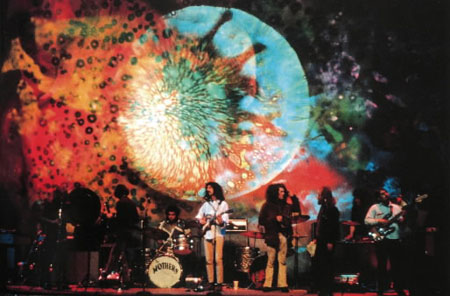
I have been aware for a number of years that there has been a legal battle between Gail Zappa, head of the ‘Zappa Family Trust’, and the so called ‘tribute’ bands that are determined to continue performing his music live. As some of you may know, there are numerous Frank Zappa tribute bands on the circuit at the moment that not only pay homage to Zappa, but also keep his memory alive. This is achieved by not only appeasing his current fans’ appetite of listening to this fantastic music live, but by spreading the word to a younger generation who are simply not aware of him. The most famous of these bands is called ‘Zappa Plays Zappa, and has the unusual credit of being legally sanctified to perform the great man’s music. This legality of course is no coincidence, as the band is headed up by Zappa’s son Dweezil (on guitar), and features the ‘Vault Master’ responsible for compiling all of the legal releases heralding from the Zappa Family Trust – Joe Travers on drums. The work that the Zappa Family Trust has implemented over the last 14 years deserves great respect, as it has unearthed numerous recordings that would otherwise not have been available to the general public. This is a laborious labor of love, and it is important that this process is quality controlled to avoid posthumous substandard releases that are associated with artists such as Jimi Hendrix for example. However, although I agree that copyright control of recorded music needs to be very carefully controlled, it is a different matter with live music. Bands such as Project/Object, The Muffin Men, Ugly Radio Rebellion, Bogus Pomp (which features guests such as Napoleon Murphy Brock and Jimmy Carl Black),The Band From Utopia, Frank Zappa Memorial Pancake Breakfast (amazing Finish band), The Zappatistas (UK) and a host of others have all performed Zappa’s music with great aplomb over many years. Indeed many of these artists come together to celebrate Zappa’s music at the Zappanale festival in Bad Doberan, Germany, which has itself been subject to the Zappa Family Trust’s legal force.  Earlier this year, I was lucky enough to witness an excellent Zappa tribute band in Cardiff called ‘The Grandmothers Of Invention‘. This band featured as far as I am concerned some of the legendary musicians who played with Zappa during the 1960’s – 1970’s, including Don Preston on Keyboards, Roy Estrada on bass (both of whom played on Zappa’s first album ‘Freak Out’), and Napoleon Murphy Brock on vocals on Saxophone. This was a fabulous opportunity for someone such as myself, who never saw Zappa live, and more importantly was too young when these musicians played with Zappa in the 60’s – early 70’s. The irony of the Zappa Family Trust’s attempt to ban bands from performing Zappa’s music is that fact that Zappa was a keen protagonist of linking current ‘projects’ with past ‘objects‘ and to me many of these cover bands represent a perfect representation of what he entitled ‘conceptual continuity” . Zappa used this process to continuously reshape his past compositional portfolio, even using it to ‘virtually’ create utopian concerts and performances that included the best aspects of various gigs, songs and recordings over the years (Check out the ”You Can’t Do That On Stage Anymore’ series for an example of this). This process however also involved Zappa using aspects of other composers’ music. For an example of this process in a single song, listen to ‘Wipe Out’ (2.54), Nite Owl (3.38) and allusions to The Beatles Sergeant Peppers (2.00) on the title track of “Joe’s Garage”. On the same album we can hear Richard Strauss’s ‘Also Sprach Zarathustra’ (2.33) and his own ‘Mo ‘n Herbs Vacation’ (2.11) in ‘Fembot in a Wet T Shirt’ . Zappa labeled some of these extracts ‘Archetypal American Musical Icons’, and would use them as a means to get audiences to associate his music and live performances with the cultural memories associated with these works. I therefore find it difficult to believe that Zappa himself would advocate the hard-line approach his trusties are imposing on the very musicians who are attempting to honor him.

zappa1

I read an article with Dweezel recently that almost seemed to claim that musicians’ outside of the ‘circle of trust’ were not capable of understanding the intricacies of Zappa’s music, and for this reason should refrain from playing it. As alluded above, this is a process that Zappa implemented to great aplomb, his music being a mixture of Do wop, Varese, Stravinsky, Musique concrète, big band jazz (although he would never admit it), rock, as well as non musical influences such as Spike Jones, cheap science fiction movies, Amos and Andy, etc etc.

Dweezel stated: “Frank’s music is much more like classical compositions than standard rock fare, The cover bands that attempt to do it don’t do it well because they’re changing things in the music to avoid the difficult parts. Most guitar players have a pattern-oriented mentality, and there’s nothing about Frank’s music that is pattern-oriented. It’s really hard to learn, especially if you’re learning things on guitar that were never meant to be played on guitar, like ‘Inca Roads’ and ‘St. Alfonzo’s Pancake Breakfast,’ things that were written to be played on marimba and keyboards, instruments that are laid out very differently than guitar. It required a complete physical transformation in terms of what I was capable of. I had to change my picking technique. It’s sort of like training for the Olympics.”

zappa21Performing Zappa’s music proficiently is indeed equivalent to competing at an Olympic games, but to me this statement represents a patronising slant on what many of these tribute bands are attempting to do. How would Zappa himself have learnt his trade if his heroes Varese and Stravinsky had asked him to stop appropriating their music into the popular music canon? How can musical ability and indeed our culture grow if we are not allowed to experience from the inside what the great masters have already done? Zappa was outspoken about this very process, as typified by the Central Scrutinizer character in “Joes Garage”. His much publicised confrontation with the ‘Parents Music Resource Centre’ also allude to his disdain for government control over musical content. It seems to me that The Zappa Family Trust is attempting to implement precisely what Zappa despised, and in doing so doing his memory a disservice.

After the result of a legal battle in the late 1970’s (I think), Zappa’s music ceased to be covered by ASCAP/BMI blanket licensing (the equivalent to the UK’s PRS/MCPS). Does this mean they can forbid other people performing their music? I ask this because I don’t know what the legal position is. I am a PRS member, but how could I stop other people playing cover versions of my music I have not registered? More importantly – would I want to? As opposed to attempting to sue these well intending venues and artists, is it not more appropriate to attempt a more amicable approach, possibly by investigating ways that live performance publishing royalties can be secured through independent publishing means? Indeed I would be really interested if anyone has examples of this procedure in practice. Alternatively, is this just a consequence of independent publishing??

There is an on-line petition for anyone interested in opposing this autocratic approach to music publishing. It can be found at http://www.PetitionOnline.com/ZFT/

– I suggest you sign it.

PS: For other excellent blogs about this subject area – please refer here and here

For a list of other bands playing Zappa’s music, please refer here.

Also check out the legal ‘jam band’ album tribute to Zappa here

Other tribute albums: Strictly Off Limits – Music Of Frank Zappa & Tommy Fortman

To subscribe to this post, please click here


← Back

Thank you for your response. ✨

Reblog this post [with Zemanta]
Posted in Frank Zappa | Tagged , , , , , , , , , , , , , , , , , , , , , , , , , , , , , , , | 4 Comments

The ways in which we can listen to and consume music

Over the last couple of months I have discovered several different ways that make it possible to listen to music on the Internet. The first and possibly most amazing is a site entitled Wolfgang’s vault. This site focuses upon live concerts, so it is possible for example to listen to rare Halloween Zappa recordings from the 1970’s, to early Hendrix shows, to Bob Marley, etc, etc. The list is enormous. Additionally, there is a large list of rare interviews with artists ranging from Bowie, to Bruce Springsteen, Dylan, etc, etc. All of the music streams in a separate window, making it possible to search the net without disrupting your listening pleasure. The site is made even more interesting by the addition of free access to Crawdaddy Magazine, artist memorabilia, photos, posters, and the Mojam concert search engine. This type of resource seems to be becoming more popular, with sites such as My Space now not being the only way to access free streamable music. I am particularly fond of the Last FM utility for Firefox called ‘Fire FM’. This toolbar enables you to create artist radio stations that automatically play music which is similar to your chosen search. A great way to listen to new music and discover different artists. It is also worth checking out Indestore, We7, and Songza,all of which offer free music in incredibly specific and detailed ways. Aside from being interesting in any-ones views on these sites, I would also like to ask this question – How will this type of provision affect the music industry? If we can listen to music in this fashion, why do we need to download mp3’s. Will they benefit or destroy the industry? Do we really need to own music when we can ‘borrow’ it in this way? Anyway, enough for this post – Back to Zappa’s 1977 Pallidium concert.

Reblog this post [with Zemanta]
Posted in Music | Tagged , , , , , , , , , , , , | 2 Comments

The Great Frank Zappa

image-frank

I recently read an excellent article about the stage premier of Frank Zappa‘s 1979 album – Joe’s Garage. It is great news that his wife Gail has eventually conceded to putting on a stage production of the show, although this reminded me that this was in fact not the first production. There was a 1999 production based at the University of Michigan that featured ex Zappa side man Ike Willis as a special guest. Although not given the blessing of the Zappa Family Trust, a recording of the production can be obtained here, and from what I can remember it is extremelly well performed.

zappa-3

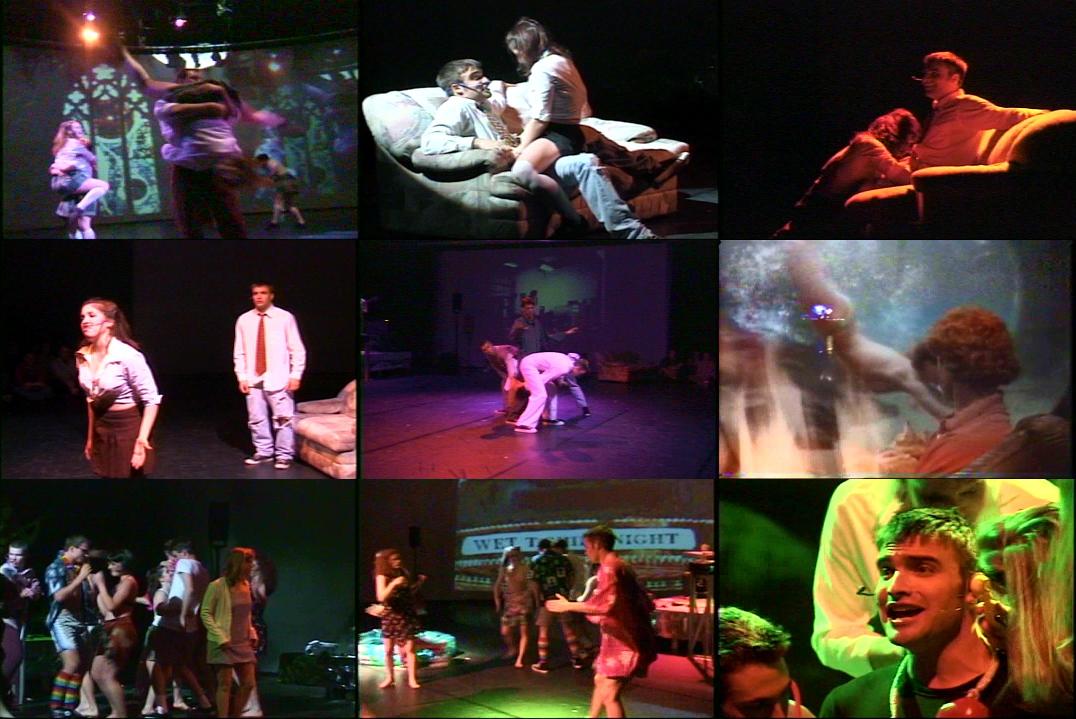
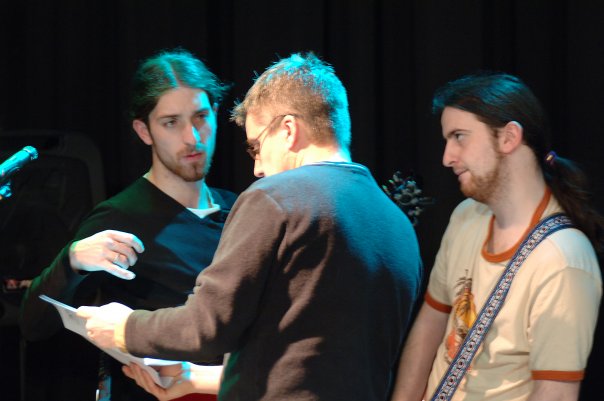
Alongside my colleague Richard Hand, I have undertaken several research projects into the work of Frank Zappa in an attempt to investigate what makes this musical genius tick. The first of these projects was an investigation into interdiciplinary teaching using Zappa as a conduit. This was achieved by working with drama/music students on a stage production of another great piece of Zappa musical theatreThing Fish. Although the work was never performed in public, it proved to be an interesting case study in how students of different artistic disciplines can work together, using Zappa compositional techniques such as project/object and Xenochrony as creative inspiration.

zappa

This was then followed by a 2007 published paper which focused on Zappa’s incorporation of musical theatre into his work. The paper discusses Joe’s Garage and Thing Fish in detail, but also argues that much of Zappa’s portfolio had a consistent narrative that was theatrical in nature. Surprisingly, there has been very little academic work written about Zappa, and aside from people such as Ben Watson and Michel Deville/Andrew Norris, there is a substantial gap in the market. Mine and Richard’s last paper was an investigation into how Zappa fused musical genres through the use of gesture, and we are currently preparing for a conference in Germany which will focus on the pervasive relationship of Zappa and sex. That’s about it for this post, but I would be pleased to hear from anyone who is interested in Zappa’s work.

Reblog this post [with Zemanta]
Posted in Frank Zappa | Tagged , , | 1 Comment

General introductory thoughts

The transition from full time musician to full time academic is a path that many music lecturers have undertaken. Where as 15 years ago I would have considered myself to be a musician – academic, these days I am firmly an academic – musician. However I do feel that past professional experience can give you both credibility with students (hopefully) and more importantly a wealth of knowledge that you can impart. Indeed industrial knowledge is becoming an important factor in modern education, as the government encourages universities to engage with industry via Foundation Degrees, and this is something I am currently researching in relationship with Roland UK (more of this later). It is interesting how the UK government can encourage growth in student numbers and at the same inform the university sector that they will not support this growth next year. Additionally, it concerns me that thanks to the recent Further Education Act ((2007)2007colleges now have the powers to award and potentially franchise Foundation Degrees. My simple question is this: how will the FE sector symbiotically work with HE if we are direct competitors? Again this is something I will return to in future posts. To conclude, one of the most difficult things I find time to do is to keep track of the massive range of new artists that are coming through. Although I have been aware of this for a number of years, it become really apparent recently when I arranged a music industry conference at the ATRiuM in Cardiff (where I work). The seminars were arranged as part of this years SWN music festival in the city and featured around 200 bands. Alongside more  established bands, the festival featured many unsigned up and coming artists, and it made me realise the need to improve my contemporary knowledge of popular music. Hence, I intend to focus some of these posts on my discoveries. To kick things off, I discovered an amazing new guitarist this week on Last FM. His name is Guthrie Govan, and he is an unusual talent. Here is a video of him playing a track off his solo album Exotic Cakes.

It is called ‘Fives’, and it is an interesting exercise in how to compose a melodic theme in a compound signature. I thought it was particularly interesting how he mixes the jazz/rock influences of guitarists such as Scott Henderson (in particular), Allan Holdsworth and Mike Stern with the two handed techniques associated with players such as Steve Via. Also note how he has assimilated the outside playing normally more associated with jazz – check out  this. In short, this guy as a major talent who deserves far more credit – I am buying the album now!

Anyway, to finally conclude this post, and as a snapshot of the previous life I referred to earlier, here is a live performance of me playing with the James Taylor Quartet circa 1989 – before the grey hairs.


Reblog this post [with Zemanta]
Posted in Uncategorized | Tagged , , , , , , , , , | 1 Comment