As I mentioned in my last post, we launched the #merthyrpop exhibition last week. Here are a few more photos of the event, featuring some of the speakers and community members
This slideshow requires JavaScript.
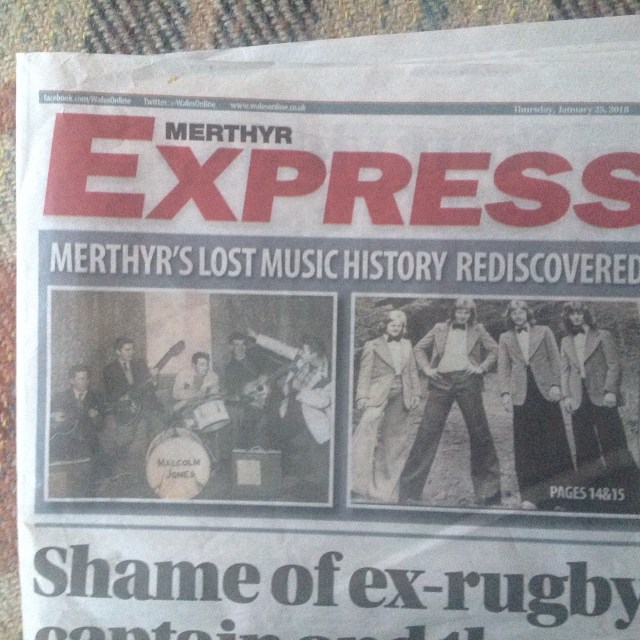
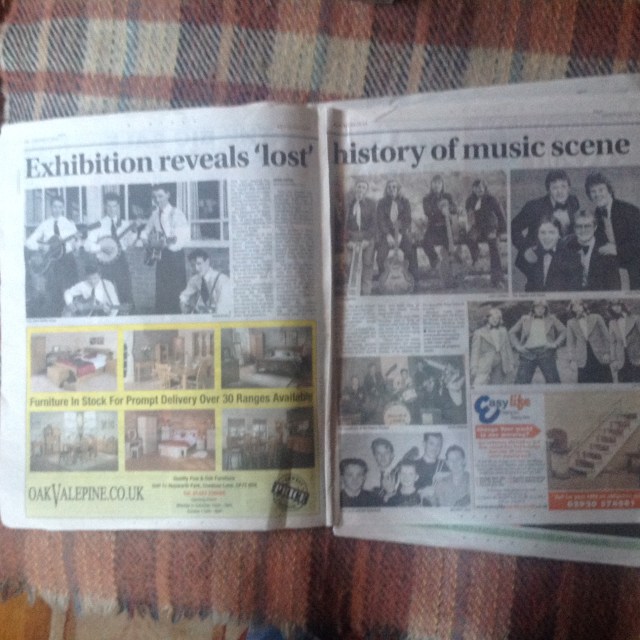
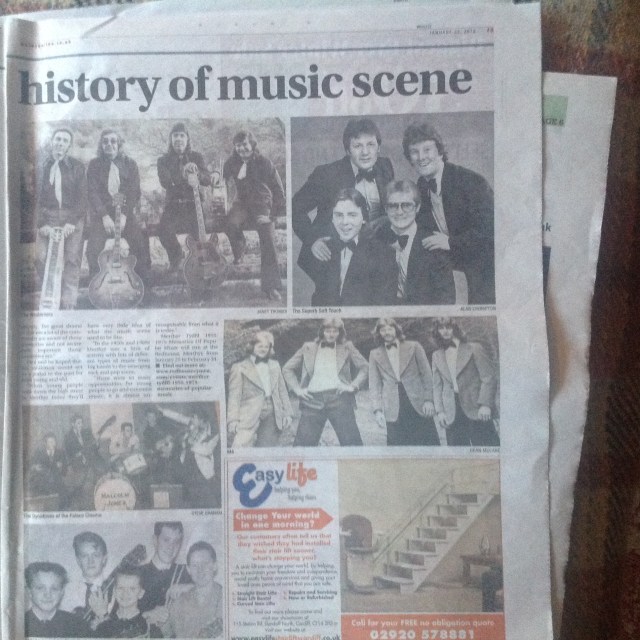
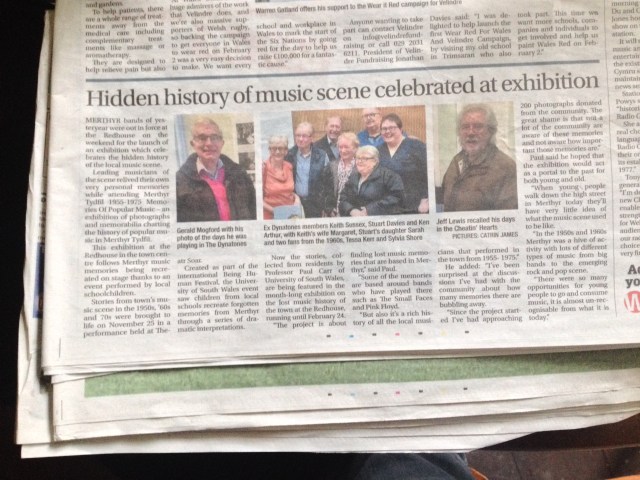
This was followed by the first week that the exhibition ran and we have had some great publicity, starting with a front and center page feature in the Merthyr Express on January 25th 2018, in addition to a feature in Wales Online.
We were then lucky enough to have a feature on ITV. After a great half day recording in the Redhouse, the show went out on the evening of Friday February 2nd as part of the 6.00 ITV news broadcast.
In addition to the short documentary, there was also a fantastic piece written by ITV’s Mike Griffiths which featured some of the community members talking about the exhibition. You can access this here.
For those of you who missed it – here is the ITV piece, recorded off the TV
Copyright ITV
To top the week off, we had a half page feature in the Merthyr Express on February 1st (p. 7)
So, after around two years of planning, the Lost Musical Histories of Merthyr Tydfil exhibition was launched on Saturday 27th of January. It was launched by a one-day symposium, and featured speakers from both Wales and around the UK, ranging from established academics, archivists, to industry lobbyists.
The morning engaged with the sustainability of local music making, with subject matters ranging from music policy making in Wales to live music campaigning. These discussions were complemented in the afternoon by some ‘hidden history’ narratives not only about Wales, but also from other locations in the UK. How do they relate to Wales and what can we learn from each other?
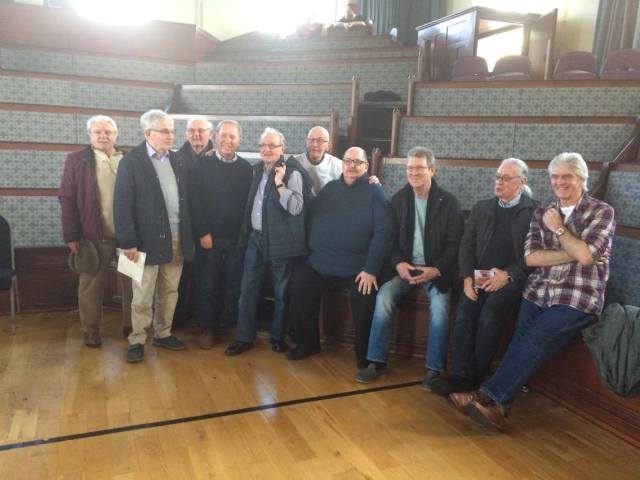
The audience consisted of a mixed demographic, including musicians and family members of musicians featured in the exhibition, community members, the music industry, colleagues from local councils and also academia.
I hope the exhibition and the symposium gives the Welsh music industry, government policy makers and the public at large an opportunity to step back, look back through the lens of time and appreciate the importance of how popular music contributes to our culture. For me, without the real sustainability of local music, we have a lopsided music industry and a subsequent history that is somewhat imposed from above, as opposed to reflecting the culture from below.
The donated photographs have come from as far afield as New Zealand, with many of them being seen in public for the first time. These visual stories not only depict the rich musical history of Merthyr, but also the cultural importance of local popular music making in the Valleys. Indeed I would argue they represent the importance of local music making generally – I really don’t think it is celebrated enough. It is why I am so grateful for the work the Womanby Street campaign has done in safeguarding the local scene in Cardiff for example. With Cardiff soon to become one of the UKs first ‘music cities’, I hope the impact of this reaches out to the Valleys, and that the memories experienced by both the musicians and audiences will have a legacy that will be analyzed positively, in events such as this in the future.
So what I have copied below is a copy of my exhibition launch speech for those that could not make it. The exhibition runs over the next month, so please take the opportunity to attend. Please tweet at #merthyrpop
Photo Courtesy of George Jones
The Lost and Found Musical History of Merthyr Tydfil
Once the largest town in Wales, Merthyr Tydfil has a rich and very proud industrial history. Although often associated with the production of coal, at the peak of the Industrial Revolution, the town’s iron works were the most productive in the world, bringing high levels of employment to the area. In modern times however, like places such as my hometown of Newcastle, the town is usually characterized in the press through its apparent deficits: stories of lower than average life expectancy, high rates of long-term illness, large numbers of people claiming benefits and poor educational attainment are rife. Recent TV programmes such as Channel 4s Skint (2015), MTV’s The Valleys (2012-14) and BBC Three’s Valley Cops (2017) have added new negative stereotypical dimensions to this narrative in the town and surrounding area, which are both unfair and unjust.
However, this exhibition intends to celebrate an alternative cultural history, a more positive narrative of Merthyr: popular music making and engagement between the years 1955-1975. This period was chosen because it is between these times that rock ‘n’ roll began to take over from big bands and when live music opportunities noticeably abounded in the town. It was also deemed important to capture the memories generated between this time period because they will eventually disappear. I have lost count of the number of times that I have been told a now deceased member of the community could have provided invaluable information, but is no longer with us. This ensures that the present opportunity is not missed to link together what Jan Assmann describes as communicative and cultural memory, internally remembered oral histories that are linked to identity and “external objects as carriers of history”. As Assman states, our memories exist “only in constant interaction, not only with other human memories, but also with “things”, outward symbols” that “carry memories we have invested in them” (111). This exhibition and the work we done as part of the Being Human Festival in November are hopefully examples of initiatives that facilitate this union.
In order to give community memories some initial context, I decided to initially position popular music activities in Merthyr via the lens of what Pierre Nora famously describes as “sites of memories” (Lieux de Mémoire) (Nora, p. 7, 1989), artificial placeholders for the no longer existent, natural collective memories. These include institutions such as archives, museums, cemeteries and of course exhibitions. The problem when dealing with the hidden musical histories of Merthyr is that the ‘sites of memory’, or ‘carriers of history’ either don’t exist, have had little attention, or are not immediately apparent. Therefore, if we accept that music making of any sort can’t be disassociated from place, the project’s initial impetus included encouraging reflection upon Merthyr’s key music venues of the past.
While some of these buildings have been appropriated for other uses as the years have progressed, others have fallen into a state of disrepair or have been demolished, therefore existing only in the realm of memory. However, all of these buildings, whether in situ or not, represent a symbolic representation of the community based musical activities that took place many decades ago. It is these buildings of course that facilitated both the musical activities and the associated social interactions, alongside other less visible ‘carriers of history’ – the musicians who made the music and the audiences who attended the concerts.
As some of you know, in November, I conducted a series of intergenerational activities, funded by The Being Human Festival and First Campus. Via Dowlais Library, this project initially facilitated communities, who remembered musical activities between 1955-1975, to learn about, reflect and document their personal recollections of the period.
Memories were triggered by encouraging the community to engage with ‘memory boxes’: compiled recorded and visual media, drawn from the developing photographic archive, donated by the community. This was followed by a series of workshops with primary age school children in the town, who were given the opportunity to discover, via reenactment, some of the hidden ‘musical histories’ provided by the older community.
These reenactments were performed at Theatre Soar on November 25th 2017, less than a week after they were developed, with the scripts being entirely improvised by director Peter Morgan Barnes.
What was interesting in the feedback we received from schools, was that the children felt they not only learnt about their local history, but were actually given the opportunity to ‘feel’ like the community members who donated the stories. A sound pedagogical benefit I would suggest, that I hope to take forward.
In many ways, this project provided the perfect pre curser to this exhibition, as it reinforced the importance live music plays on the development of community and its consequent heritage. Some of the community members who engaged with the Being Human event had not met each other for many years, despite the fact that they played such an important part in the history of music making in the town.
Gerald Mogford standing next to his photo of the days he was playing in The Dynatones. Photo Courtesy of Catrin James
Jeff Lewis pointing out his days in the Cheatin’ Harts. Photo Courtesy of Catrin Sarin
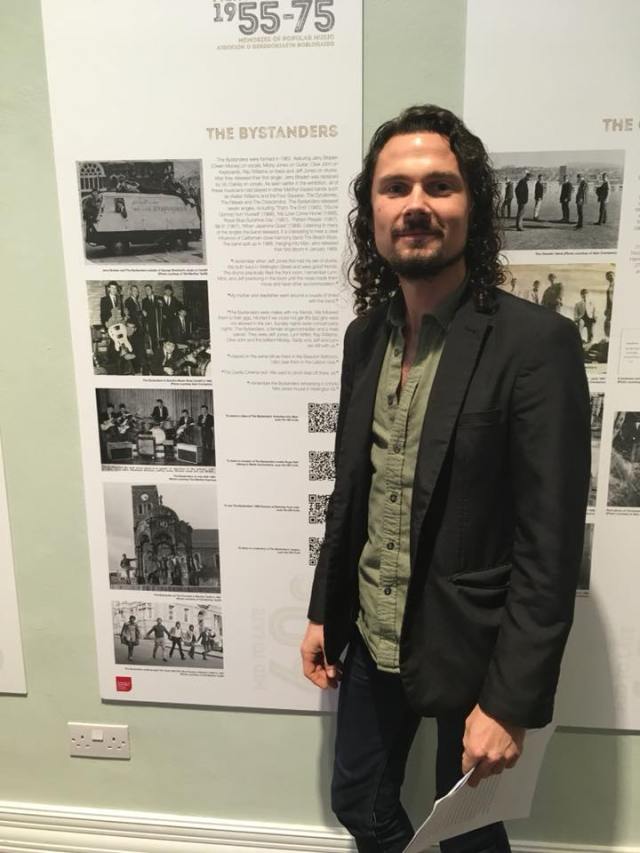
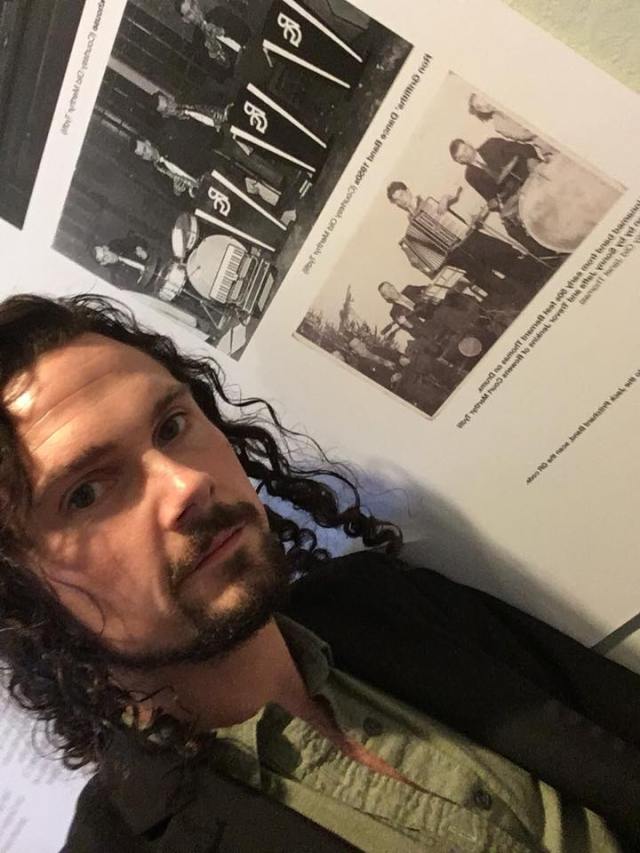
Micky Jones’ son George Jones, standing next to his fathers Bystanders photos. Photo Courtesy of George Jones
Son of Man guitarist George Jones, standing next to a photo of his grandfather, who played steel guitar in an unnamed band. Photo Courtesy of George Jones
Although understanding the relationship of ‘hidden history’, nostalgia and identity construction is the underlying ‘research angle’ of the exhibition, the forward facing community aim is simple: to safeguard local popular music heritage for future generations, by not only housing and making visible existing documentation, but attempting to generate a wealth of new material, created by the community, for the community. Eventually, I hope this exhibition provides the impetus to develop a continually evolving, local narrative of popular music, which resonates with the more dominant popular music narratives that have already been written.
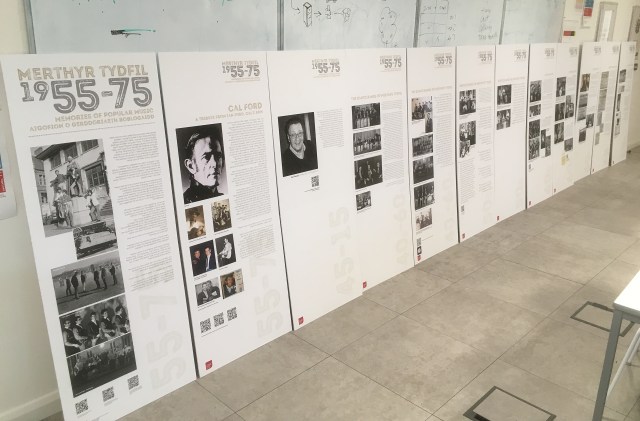
The exhibition includes much memorabilia, ranging from the big band era and skiffle music of the 1950s, visits by the likes of the The Small Faces, Pink Floyd and Hermans Hermits in the 60s, to the staggeringly large lapels and flares of the 70s ::, to the many photographs and ‘oral history’ accounts of local musicians and audiences.
In addition to providing a new ‘site of memory’, it is hoped that this exhibition will capture the two categories of nostalgia outlined by Svetlana Boyn – reflective and restorative. Boyn describes restorative nostalgia as a “transhistorical reconstruction of the lost home” and I would suggest that both the Being Human event work and this exhibition provides an excellent example of this, providing opportunities for communities who remember the actual events and those who don’t to reflect and learn from their past, their history, their memories and their heritage. Most important, if offers up opportunities for both young and old to make sense of it.
Saturday 27th January 2018, 11am- 4.30pm, Followed by Exhibition Launch
Join us for a free one-day research and industry event marking the launch of a one-month exhibition celebrating the hidden history of popular music in Merthyr Tydfil, between 1955-1975. The event is organised by The University of South Wales’ Centre for the Study of Media and Culture in Small Nations
This symposium launches a month long exhibition on the history of popular music in Merthyr Tydfil, between 1955 – 1975. Taking place in the Town Hall ‘Red House’ in Merthyr Tydfil, the papers presented will be of interest not only to an academic audience, but also the music industry, community organisations and government bodies at large. The symposium features a range of established and emerging speakers from both academia and industry and will focus principally on the following research questions
What are the relationships between local music making and more mainstream histories?
What are the most appropriate methodologies of capturing local music histories?
How can lost local popular music histories be made relevant to young people today?
How can lost local musical histories impact individual and shared identities?
How can local music making be made more sustainable?
The debates discussed in the morning range from music policy making in Wales to live music campaigning, which are complemented in the afternoon by ‘hidden history’ narratives such as the importance of locality place and memory in the construction of history, case studies of local popular music archives and the relationship of local histories to the ‘mainstream’. The day will end with a talk by Professor Paul Carr on ‘The Lost and Found Musical Histories of Merthyr Tydfil’, prior to the exhibition being launched.
Past and Present: Local Music Making and the Politics of Popular Music
The Red House, Merthyr Tydfil. Saturday January 27th 11am – 5pm
11.00
Welcome and Introduction: Paul Carr
11.15
Panel 1: The Music Industry in Wales: Chaired by Paul Carr
11.15 Luke Thomas (University of South Wales) – Culture Versus Economy: Popular Music Policy in Wales
11.30 Ewan Moor (Save Womanby Street) – From Anger to Action: Campaigning in Live Music
11.45 Joseph O’Connell (Cardiff University) & Sam Murray (Teesside University) – Are You With Me Now?: The Sŵn Performer’s Journey
12.05 Liz Hunt (Creative Republic of Cardiff) – Rebooting the Moon: Creative Republic of Cardiff
12.20 Q&A with the panel
12.45-1.30
Lunch Break
1.30
Panel 2: Alternative Local Musical Histories: Chaired by Luke Thomas
1.30 Anne Cleaton (University of East Anglia) – How Musical is my Valley? an exploration into the role of place in the musical consumption and production of local popular musicians
2.00 Dave Allen (University of Portsmouth) – Pompey Pop: a case study of a local music archive
2.30 Jez Collins (Birmingham City University) – Local Popular Music Making: pump up the grime
3.00 Mike Brocken (Liverpool Hope University) – Phillips’ Sound Recording Services: the studio that tourism forgot
3.30
Short Break
4.00
Paul Carr (University of South Wales) – Exhibition Launch: The Lost and Found Musical History of Merthyr Tydfil
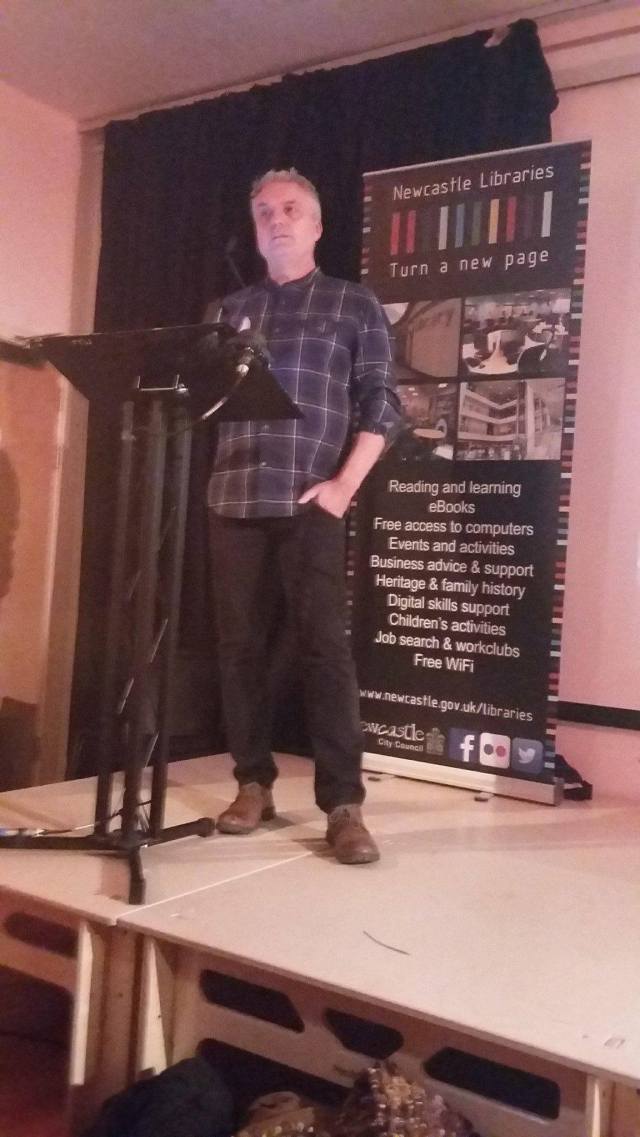
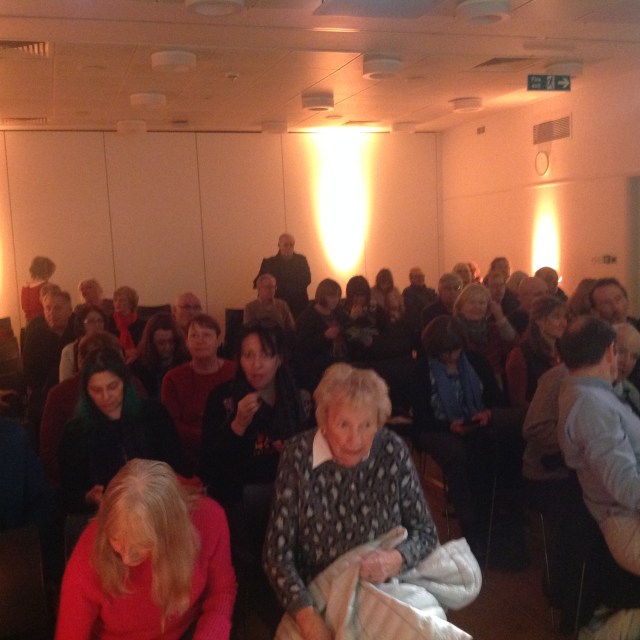
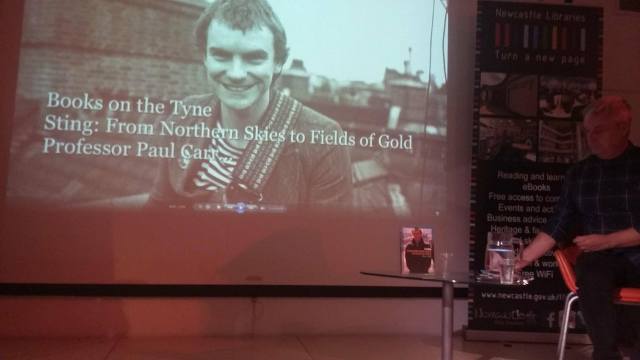
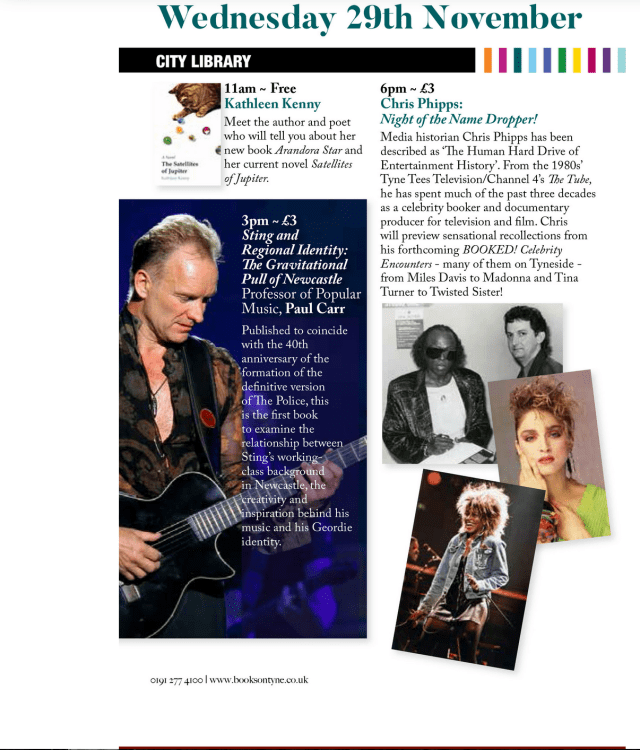
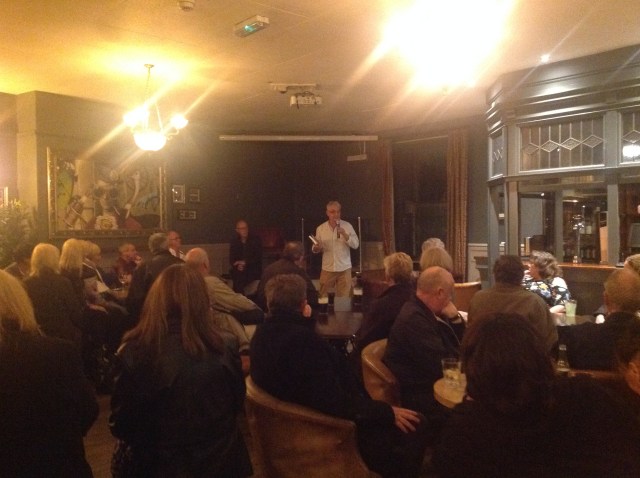
I had a fleeting visit to Newcastle last week to talk about my new book on Sting: From Northern Skies to Fields of Gold. As can be seen in the photo below, the event was well attended, with the audience interested in the ways in which he (and us) can negotiate Geordie Identity in various ways. I found out after the talk that the lady taking her seat in the photo was in fact Sting’s auntie (on his mother’s side). She came up at the end of the talk and thanked me for providing a positive narrative about her nephew.
This talk has followed previous ones in Wallsend and Bristol and I am looking forward to another couple booked thus far next year in Cardiff and Dorset. Let me know if you want me to do one – in particular if it coincides with Sting’s tour of the Last Ship next year.
I finished one of the most satisfying experiences of my musical life last week, when we completed an eight day series of events, which involved capturing important musical memories of the community of Merthyr Tydfil. These memories were subsequently taught to school age children in local schools, who reenacted the memories of their musical heritage. The ‘memory capturing event took place in Dowlais library, during which some community members met up again for the first time in nearly 50 years, so it was a really profound experience. During the session, which was prompted by a lecture by myself and specially made ‘memory boxes’, memories were uncovered that many of the community members did not even realise they had. Essential work that was not only therapeutic for the community, but great material for the reenactments that were devised in local schools the following week.
This slideshow requires JavaScript.
Here are a few of the musical memories we captured during the day. All recordings were documented by DigiChemestry.
Once the memories were complete, we then entered two local primary schools to teach the children about the memories. This was followed by director Peter Morgan Barnes improvising scripts, that were taught to the children and annotated by Jane Ellis from First Campus. I think the photos speak louder than what I could describe here in terms of the how much the children enjoyed and learned on the day.
Gwaunfarren Primary School
This slideshow requires JavaScript.
Pantysgallog Primary School
The week completed by a session at Theatr Soar on Saturday November 25th. The event was very well attended by the community, who left some fantastic tributes as outlined below.
Sheila Spencer: Just spent a lovely hour in Zoar listening to musical memories and the children performing were great. I met some people I haven’t seen for about 47 years. Thanks to all those who put a lot of effort into this afternoon
A great afternoon mixing talents of the past and those of today’s young school children. Looking forward to the January exhibition in the Red House
Thoroughly enjoyed this afternoon. The kids and production team worked so hard to nail that performance in less than a week! Well done to all
Stuart Davies: A wonderful afternoon so proud of the children, and lovely to meet old friends, pretty sure it’s brought back great memories to so many people, thank you Paul
Frank Janes: Lads and lassies, I’m just back from Zoar theatre in Merthyr after watching a production by professor Paul Carr of children acting out musical memories of Merthyr. The children were first class and I have to mention one memory that they performed. It was a memory of Aberfan and the bands that performed at that time to raise money for the disaster. … The children were on stage dancing and playing. Suddenly, as one, they stopped. Some children lay on the floor, others turned their backs to the audience and the theatre went quiet. The children re enacted that fateful day in the only way possible. The children of today remembered the children of yesterday who went to sleep that morning… I, as did others, cried. I have been in the company of old friends today, and that memory I will cherish……. The memory that the children imparted on the audience will not be forgotten by everyone in the theatre…. Well done and thank you.
I really enjoyed the afternoon the children were great. Happy memories.
They must have put a terrific amount of work to look so good
Sheila Spencer: I thought the part about Aberfan was beautifully done, as well as the whole performance of course. Thoroughly enjoyed it.
Frank Janes: Your production touched everyone yesterday Paul, indeed the children will carry a special memory
Allan Jones: Thoroughly enjoyed this afternoon. The kids and production team worked so hard to nail that performance in less than a week! Well done to all
Irene Janes: A great afternoon mixing talents of the past and those of today’s young school children. Looking forward to the January exhibition in the Red House
Stuart Davis: Had a lovely afternoon in soar chapel in Merthyr on Saturday as part of the history of popular music in Merthyr between 1955 to 75 it was so great to catch up with Ken Arthur, Keith Sussex, and Gerald Mogford. I’ve spent quite a few years playing with Ken and Keith from 1965, they were in the first group (The Villians ) alongside The late Bobby Watkins that I played with, then in the late 80s we reformed for more than a few years until Bob was taken from us, those boys were like a family to me, so it was great to meet up again and remember some great memories
Louise Bibby headteacher at Gwaunfarren: I just wanted to say a big thanks for the wonderful performance today. I was so impressed! The children and parents thoroughly enjoyed it. It was a wonderful way to get a greater understanding of the musical history of the town and also to work with another school. Please could you pass on my thanks to your team and we hope we will have the opportunity to work with you again. Please could you send us any materials that we could use as a learning tool with the rest of the school?
This slideshow requires JavaScript.
I will add more information to this page once it comes in, including an ‘impact video’ and also a documentary, but in conclusion, just to say that I think this sort of research is essential not only for the maintenance of local heritage, but also to ensure that local history is written into the narrative of popular music. So many of the people I spoke to had memories and experiences that resonated with that of the main stream. Bands moved to London and Hamburg in the 60s, people frequented rock ‘n’ roll gigs during the week and dance events at the weekend, supported famous artists and saved up for early versions of famous guitars. If we are to have a rounded history of popular music, these historic memories need to be documented for future generations and understood as a version of local heritage. Thank you to Being Human for assisting us to do this. I am off to New Zealand next week to talk about it some more – looking forward to it.
This week I have been preparing for the week of activities we are doing as part of this years Being Human Festival. This work will include capturing memories of community members who remember the years 1955-1975 in addition to getting getting school children in the area to both appreciate and interact with these memories. Check out the promotional video below to give you a snapshot of what we are doing
One this project is complete, I am off to New Zealand in December to talk about it, then back to begin planning an exhibition and symposium in the Red House in late January. It has been a real privilege to compile both the memorabilia and the stories I have so far and I will really looking forward to continuing this really positive narrative of the town.
If you want to hear and see the memories in an amazing setting, for free on November 25th for free, then book up here. To book up for the symposium in January, again for free, book here. The outline of the symposium is copied below. It is a fantastic opportunity not only to learn about issues related to local popular music making in Merthyr, but also south wales and the UK more generally. Hope to see you there.
11.00 – Welcome and Introduction: Paul Carr
11.15 – Panel 1: The Music Industry in Wales: Chaired by Paul Carr
Luke Thomas (University of South Wales) – Culture Versus Economy: Popular Music Policy in Wales.
Ewan Moor (Save Womanby Street) – From Anger to Action: Campaigning in Live Music.
Joseph O’Connell (Cardiff University) & Sam Murray (Teesside University) – Are You With Me Now?: The Sŵn Performer’s Journey.
Liz Hunt (Creative Republic of Cardiff) – Rebooting the Moon: Creative Republic of Cardiff.
12.20 – Q&A with the panel
12.45 – Lunch
13.30 – Panel 2: Alternative Local Musical Histories: Chaired by Luke Thomas
Anne Cleaton (University of East Anglia) – How Musical is my Valley? an exploration into the role of place in the musical consumption and production of local popular musicians.
Dave Allen (University of Portsmouth) – Pompey Pop: a case study of a local music archive.
Jez Collins (Birmingham City University) – Local Popular Music Making: pump up the grime.
Mike Brocken (Liverpool Hope University) – Phillips’ Sound Recording Services: the studio that tourism forgot.
15.30 – Short Break
16.00 – Paul Carr (University of South Wales) – Exhibition Launch: The Lost and Found Musical History of Merthyr Tydfil
It was fantastic news to hear this week that Sting’s The Last Ship will be touring the UK next year. After a short run on Broadway and a recent version launched in Turku Finland, this production will be especially adopted for a UK audience. Featuring fellow Geordie Jimmy Nail, I am sure it will have a significant impact in Newcastle in particular.
As many readers of this blog will know, my impetus to write my book, From Northern Skies to Fields of Gold, is because it has the same backstory as Sting’s The Last Ship. Coming from Newcastle, and being from a similar social background to Sting, I have, in many ways, also attempted to engage with my own fluctuating relationship with my hometown over the last thirty years, through writing the book. In my mind, after moving to London upon leaving Music College in 1984 and residing outside of the area ever since, Newcastle has become a place of my own idealized construction. I, like Sting, have found myself drifting in and out of my ‘Geordieness’, straddling the complex dividing line between naturally disguising my accent for both practical and class-related reasons, to feeling an intensely tribal, almost jingoistic pride of my homeland, something that has intensified as I have got older. So when Sting released the album The Last Ship a few years ago, after listening to the first few tracks, the music spoke to me profoundly. Many of the songs directly spoke to my own background, including my relationships with family and friends, the various jobs that I undertook after leaving school, social expectations, and my hometown of Blaydon.
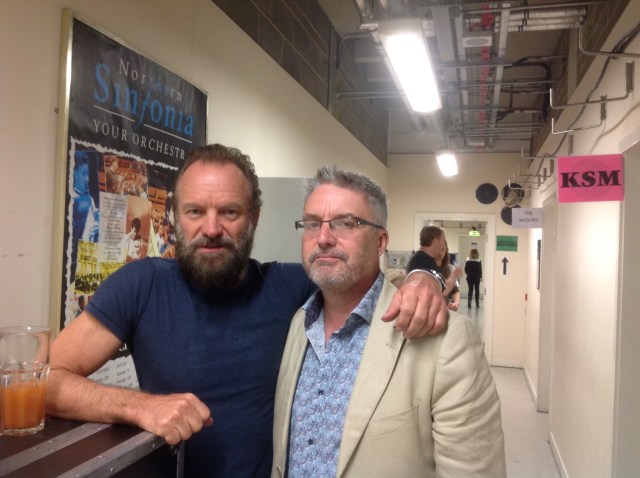
As I mention in the book, in the song ‘Dead Mans Boots’ in particular, it was easy for me to not only understand its content as a ‘passive observer’ (where the music has no real emotional resonance), but also for me to inhabit the song. It was easy for me to be what Alan Moore describes as the ‘possessed protagonist’, where I became the person singing the song and at times, having the song sung to me. I first experienced this in Sting’s music when I heard the track ‘Why Should I Cry For You‘ from The Soul Cages in 1991. When I met Sting a couple of years ago, he explained how this feeling some of us feel as part of our Geordie identity is almost impossible to explain in words, but I would argue that he can express these feelings via music – an expression that has frequently used to combat his writers block.
Most importantly, these feelings and emotions are not personal to Sting – they are universal. As Joe Sharky discusses in his excellent book Akenside Syndrome, the simultaneous love and hate of Newcastle is a real phenomena experienced by many people. It is however particularly fueled when one realises the viability of any return is indeed impossible. It is the experience of this phenomena that has fueled my own work on Sting: From Northern Skies to Fields of Gold. Although the book is about Sting, its meta narrative is about this much larger phenomena.
The meaning of the term ‘Geordie’ has been debated over many years, with historians Robert Colls and Bill Lancaster asserting that‘there is no definitive meaning to the name’ These authors provide a number of disputed meanings for the word, such as ‘a name given to coalminers’, ‘a term for the Tyneside dialect’ and ‘people born within three miles of the banks of the river Tyne from South Shields to Hexham’. Being born in Blaydon with the Tyne on my doorstep, I have often used this as a ‘right of passage’ to describe myself as a ‘true Geordie, despite the fact I have lived outside the area for years.
These ambiguities resonate with the depictions of the region by the media, which often describe it as ‘grim’ or ‘spectacular’, ‘amusing’ or ‘threatening’, ‘artistic’ or ‘unqualified’, although adjectives such as ‘grim’, ‘threatening’ and ‘unqualified’ often take the dominant position unfortunately. One need only look one of Sting’s biographers’ depictions of his background to see examples of this narrative:
‘All around lay miles of drab, quarried hills, slag-heaps and allotments’; ‘How many children from a background of backstreet slums and near poverty have made it to the top in any decade this century?’
Even Sting, especially in his early relationship with his hometown, had a tendency to play on this, as I have frequently done myself when romanticing how ‘tough my school days were’ However, placing these statements into context, regions such as Newcastle have to be considered ‘imagined communities’: ‘Who the Geordies are depends on who they imagine themselves to be’, with belonging’ being ‘an act of affiliation not just of birth.
As I have frequently discussed with my wife, the fact that my own recollections of Newcastle are often related to this ‘imagined north’, does not make them any less real. Indeed it could be argued that authors such as Dylan Thomas wrote more profoundly about Wales – when he viewed it from a distance. The same is true of Sting. Having lived outside Newcastle since early 1977, Sting’s perspective on his home town can realistically be nothing but mythical and poetic, but it is this ‘imaginary North’ that continues to exert a gravitational pull on him. This North is refracted through separation, wealth, loss, travel and all that Sting has experienced over the last four decades. It is this North that he and many of us call home.
Just to let everyone know of a great free music event that is taking place in Merthyr Tydfil on November 25th at Theatre Soar. Thanks to funding from the Being Human Festival and a large number of external partners, this is an opportunity to experience a performance of community memories of popular music making in the town, between 1955 to 1975. But that is not all, these memories will be accompanied by performances from Merthyr primary school children, who will reenact the original memories. Places are limited, so if you are interested, please book via this link.
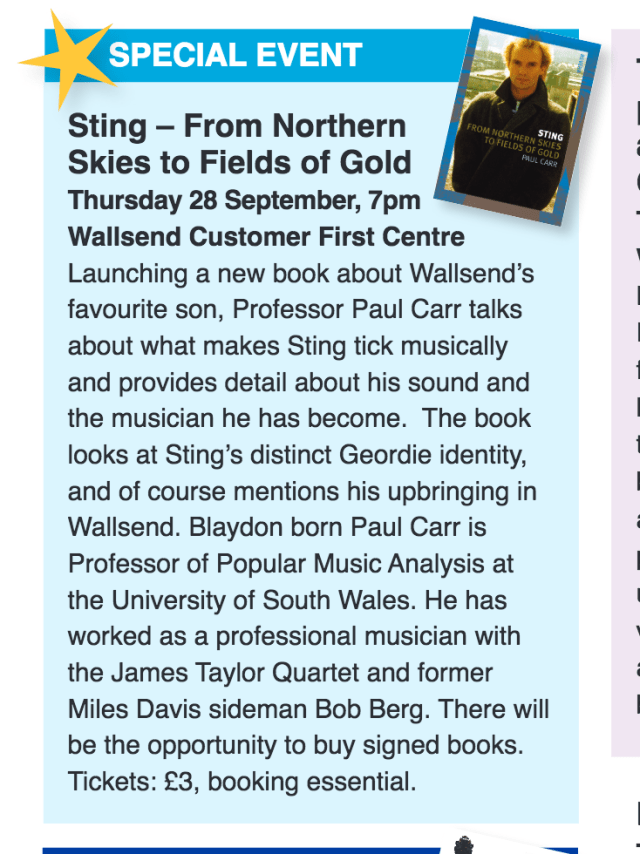
Well, after three years, my Sting book From Northern Skies to Fields of Gold was released last Tuesday. In order to launch the book, I did a couple of events this week in Sting’s hometown of Newcastle – where else! The first event was with Lindisfarne drummer Ray Laidlaw on the tour bus Tyne Idols.
This was a great opportunity not only to sit next to Ray for three hours listening to his amazing knowledge of North Eastern history and culture (I now know where the ‘sleezy snackbar’ is, where Lindisfarne ate ‘sickly sausage rolls’), but also to give a presentation on my Sting book at one of Newcastle’s most iconic live music venues – the Gosforth Hotel.
Many will know that Sting played in a small room upstairs in this venue, very regularly over a two year period from October 74. It is a room where many of his famous songs were nurtured and a space that is mentioned extensively in his autobiography Broken Music.This room is now fittingly called ‘The Sumner Suite’ and it was great to speak to a packed audience about Sting’s time there.
As those of you that know the space will realise, aside from the decoration – the room is largely unchanged and in my opinion deserves some sort of blue plaque recognition for its place in north east culture. It also features some cool memorabilia and artwork.
In all, this was a great way prepare for the official Launch the following day, in Sting’s hometown of Wallsend.
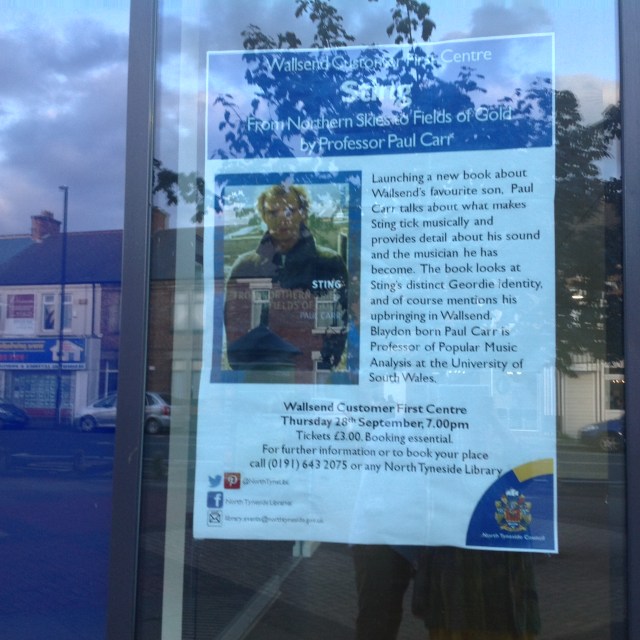
The official Launch took place in the new Wallend Library, literally just up the road from where Sting was born. This event had been publicised for a couple of months and was also really well attended.
The talk give me the opportunity to talk at length about the book, with a particular focus on Sting’s relationship with his hometown. In addition to members of the public and some friends and family, it was great to also see many of Sting’s associates from the past there. These guys helped me tremendously when writing the book, so it was so pleasing and humbling that they made the effort to attend.
This was very much the ‘Wallsend’ version of the book launch, but over the coming months I am doing other talks. I already have a return talk in the centre of Newcastle in November, in addition to Bournemouth and Brisol University, all of which will have tailored talks. If you want me to do a signing, talk or interview, by all means just get in touch with me or my publishers, and we will arrange it.
So if you want to buy the book, it is available directly via the publishers, or via amazon. Also, thanks for the plug on The Police Wiki. More news soon.
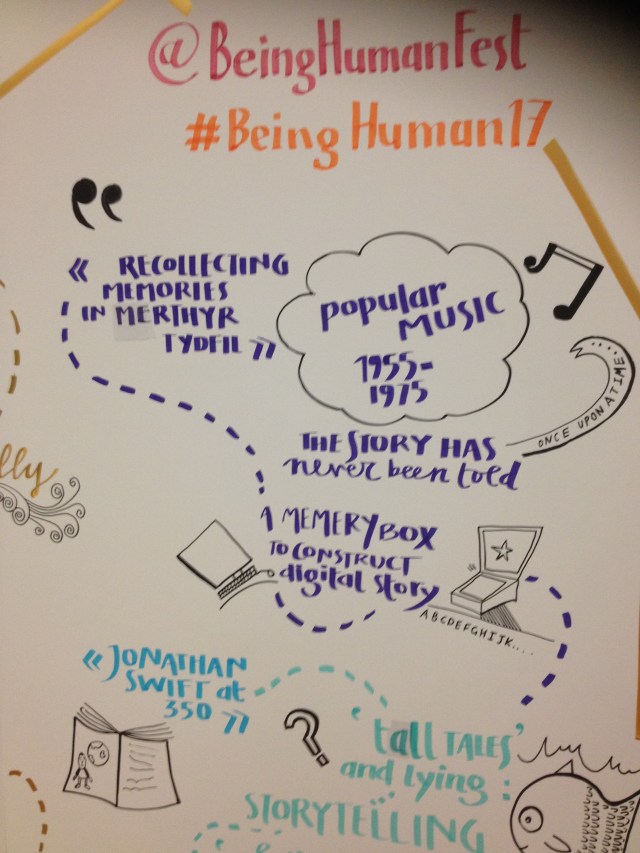
I really enjoyed my talk yesterday as one of seven other projects that have been chosen to highlight some of the fantastic work taking place in this year’s Being Human Festival. The festival, taking place between November 17th – 25th, is the biggest Humanities based festival in the UK and it is great that the hidden histories of popular music will be part of this year’s festivities. I be be posting more info as the events get nearer, so this is just a taster of what we will be doing.
This intergenerational project focuses on the relationship between nostalgia, memory and the (re)construction of ‘alternative music histories’ that have being ‘lost’. Working with both the younger and older generation in the town, the project is interested in encouraging non-academic audiences to consider questions such as the relationships between memory and how popular music making has been reported historically; how memories of engagement with local, national and international popular music activity facilitates the negotiation of individual and shared identities; and how these memories can be creatively reconstructed to resonate with younger audiences today. The research builds on the previous research of academics such as Davis (1979), Boyn (2001) and Pickering and Keightley (2015), in addition to my own previous work for the European Social Fund (2011), the Beacons for Public Engagement (2008) and my forthcoming monograph on Sting (2017).
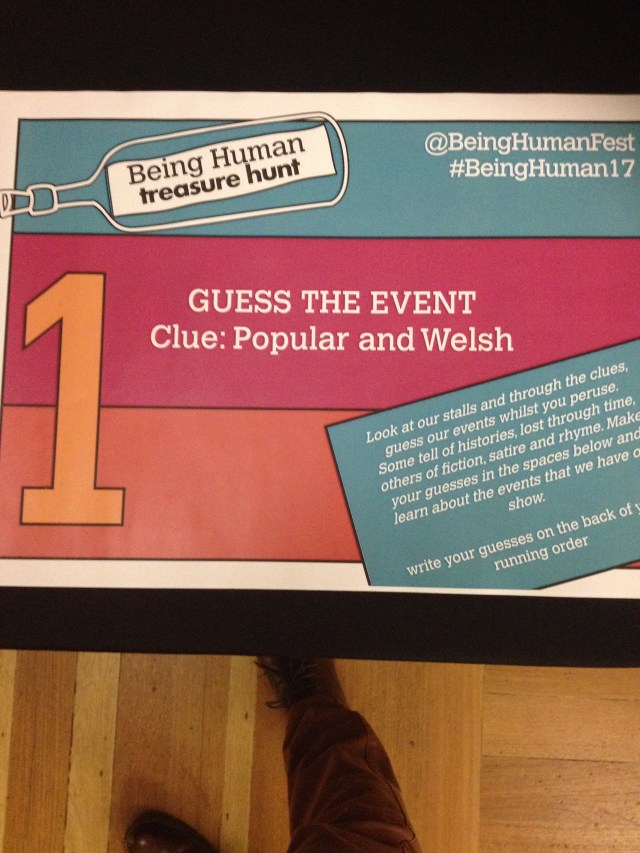
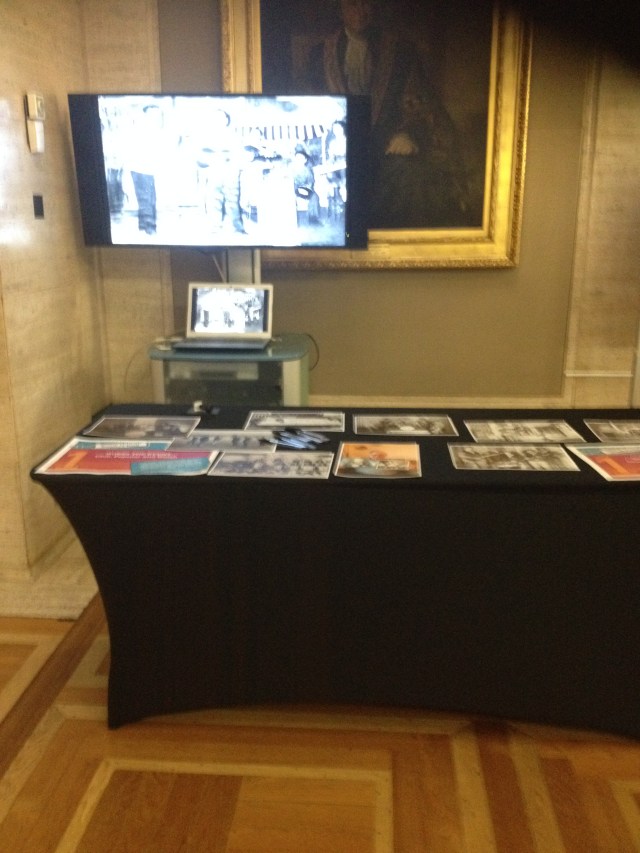
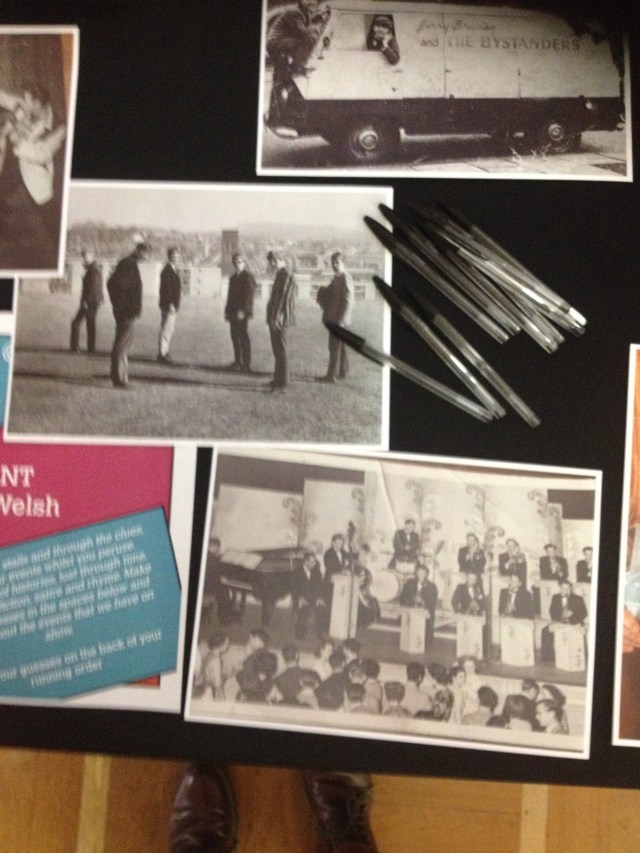
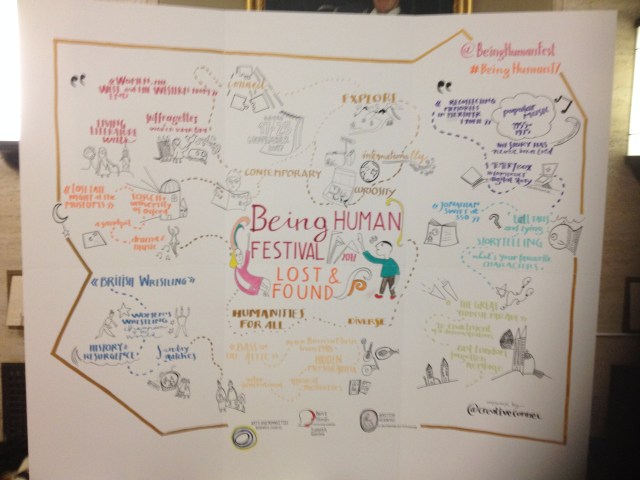
My project is divided into three sections, that I will briefly explain below. However, before that, here are a couple of images taken from yesterday’s event at Senate House.
Event 1: Dowlais Library
Research Questions: In what ways can musical sound, photographs and other memorabilia facilitate nostalgia and memory? What is the connection between personal memory of ‘local’ popular music activities when compared to that of other community members and more official documented ‘histories’?
This one-day oral history workshop, which will be delivered in conjunction with Merthyr Tydfil Libraries will seek to answer these questions. The workshop will take place on November 17th 2017 in The John Owen Suite at Dowlais Library, with the intention of facilitating older (60 plus) community members to remember, document and record their memories of musical happenings that took place in Merthyr Tydfil between 1955 – 1975. Although open to all, the event will be advertised principally to community groups in the town. The workshop will be facilitated by dedicated ‘memory boxes’, developed in conjunction with Merthyr Tydfil Libraries, with each box containing previously unseen photographs of music activity in the town between 1955 – 1975, in addition to ‘time bank’ recordings, local newspaper scans, vintage film footage and a list of questions to stimulate conversation.
The first half of the day will focus on looking at and listening to the memorabilia, after which in the afternoon participants will be assisted in scripting their own short individual stories for recording into mp3 format. These recordings, which need to be recorded before they are ‘lost’, will be used as the impetus for events 2 and 3.
Event 2: Various Schools in Merthyr Tydfil
Research Questions: How can lost local musical memories and memorabilia of the past be relevant to young people today? How can lost local musical histories impact our individual and shared identities?
Using the recorded footage documented during Event 1, alongside various photographs/scans , this session invites school pupils (aged 15-16) in the Merthyr Tydfil area to bring ‘lost’ musical histories and memories to life via constructing a series of short dramatic ‘reenactment’ performances. These sessions will be delivered by director Peter Morgan Barnes and myself and will take place in three local schools in the Merthyr Tydfil area, between November 20th – 24th. The final performances will be showcased during Event 3. It is the intention that these symbolic narrations, instigated by a generation who can’t remember the original events, complement the literal ones generated during activity 1.
Event 3: Theatre Soar
Research Questions: What are the lost musical histories of popular music in Merthyr Tydfil? What are the impacts of these local histories on both the community who remember them and the younger generation?
This final three-hour public event will showcase the work developed during the week of the Being Human Festival, taking place in Theatre Soar on Saturday November 25th. After showcasing the recorded testimonies alongside the archive photographic footage that inspired them, the event will then feature a series of reenacted performances by school children. After a short break, this will be followed by a short discussion about the performances, in addition to a ‘question time’ inspired interview, where I interview around half a dozen musicians who were part of the Merthyr Tydfil music scene between 1955-1975.
The great thing about yesterday’s Being Human event aside from the knowledge and general friendliness of the people who organise it, is that it offers the opportunity to place the important history of popular music making in the valleys on display. These stories are completely lost at the moment, so I am pleased to be offered the chance to address the balance. By the way, the first picture in this post is Pink Floyd playing in Merthyr in the late 1960s!























 Professor Paul Carr Music Consultancy